Last updated November 21, 2026
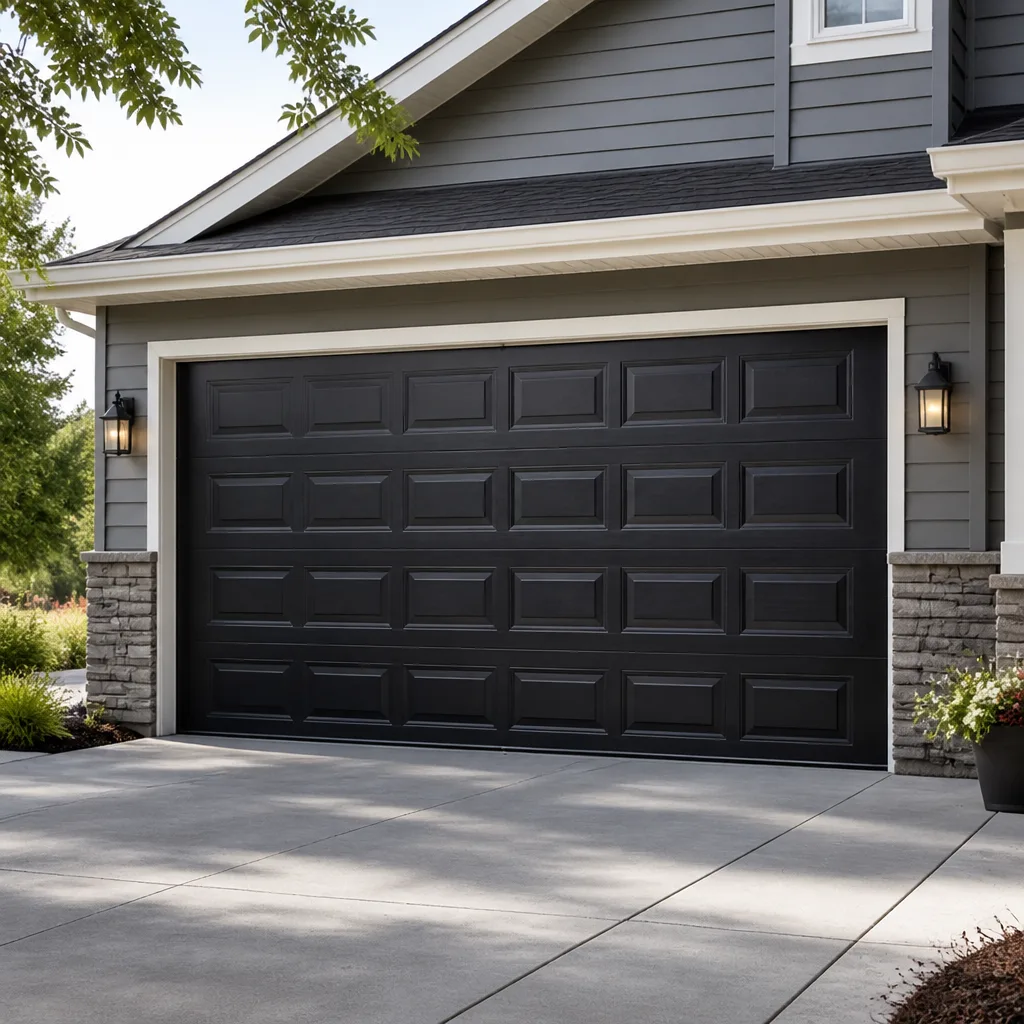 Raised-panel steel
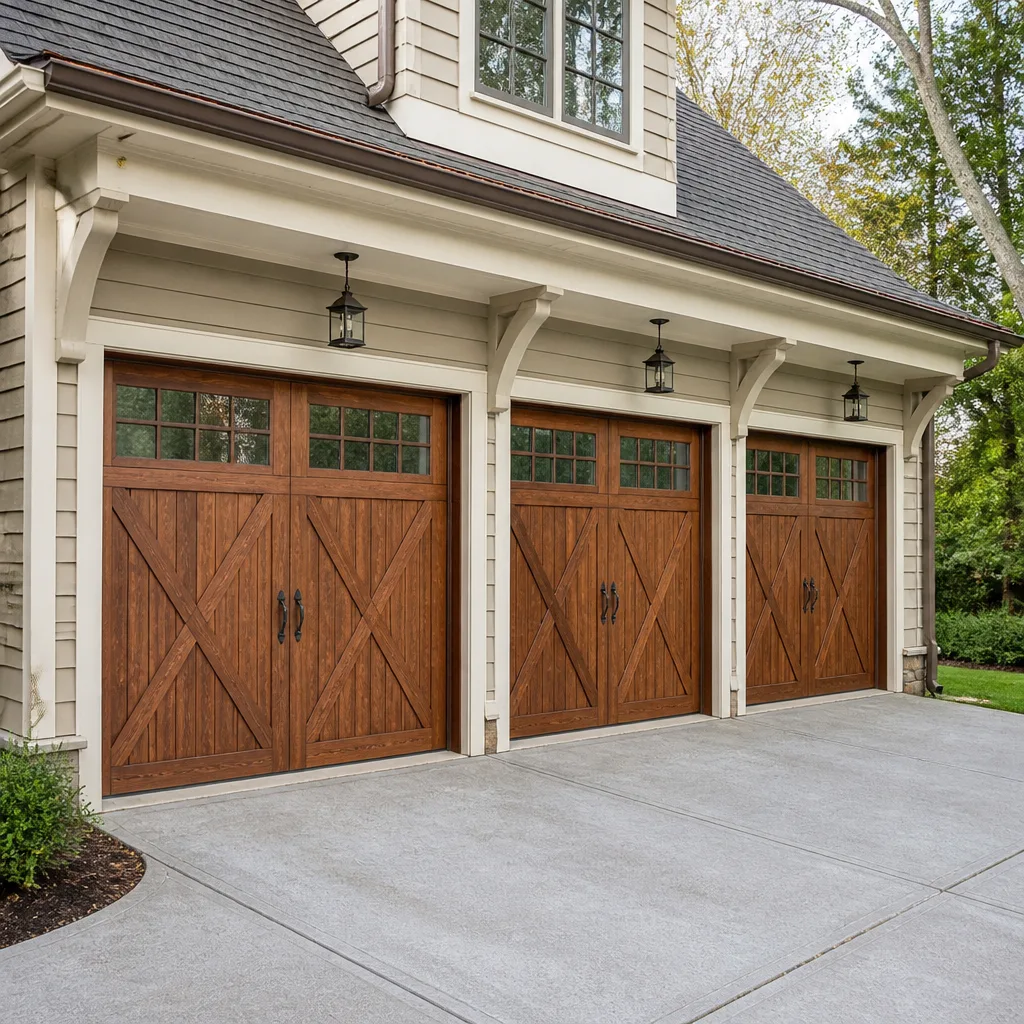 Carriage house
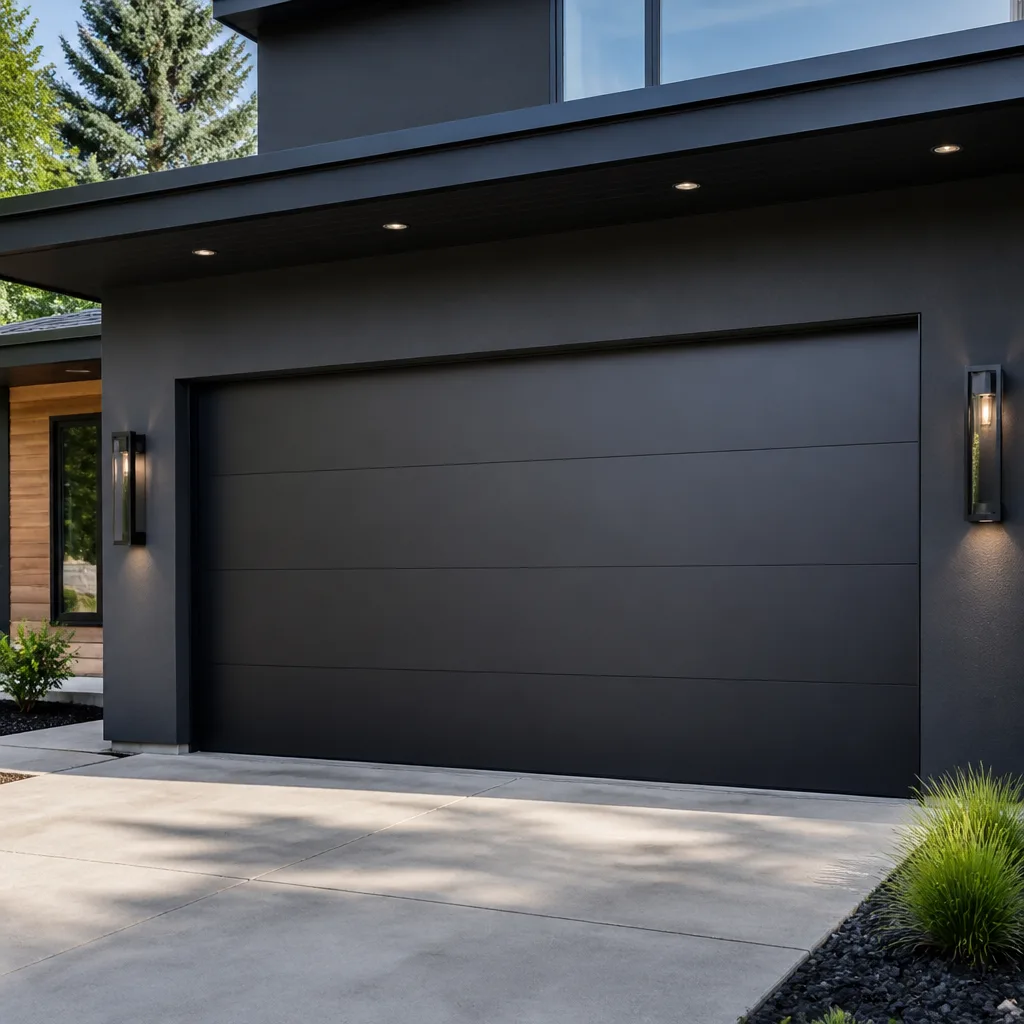 Modern flush
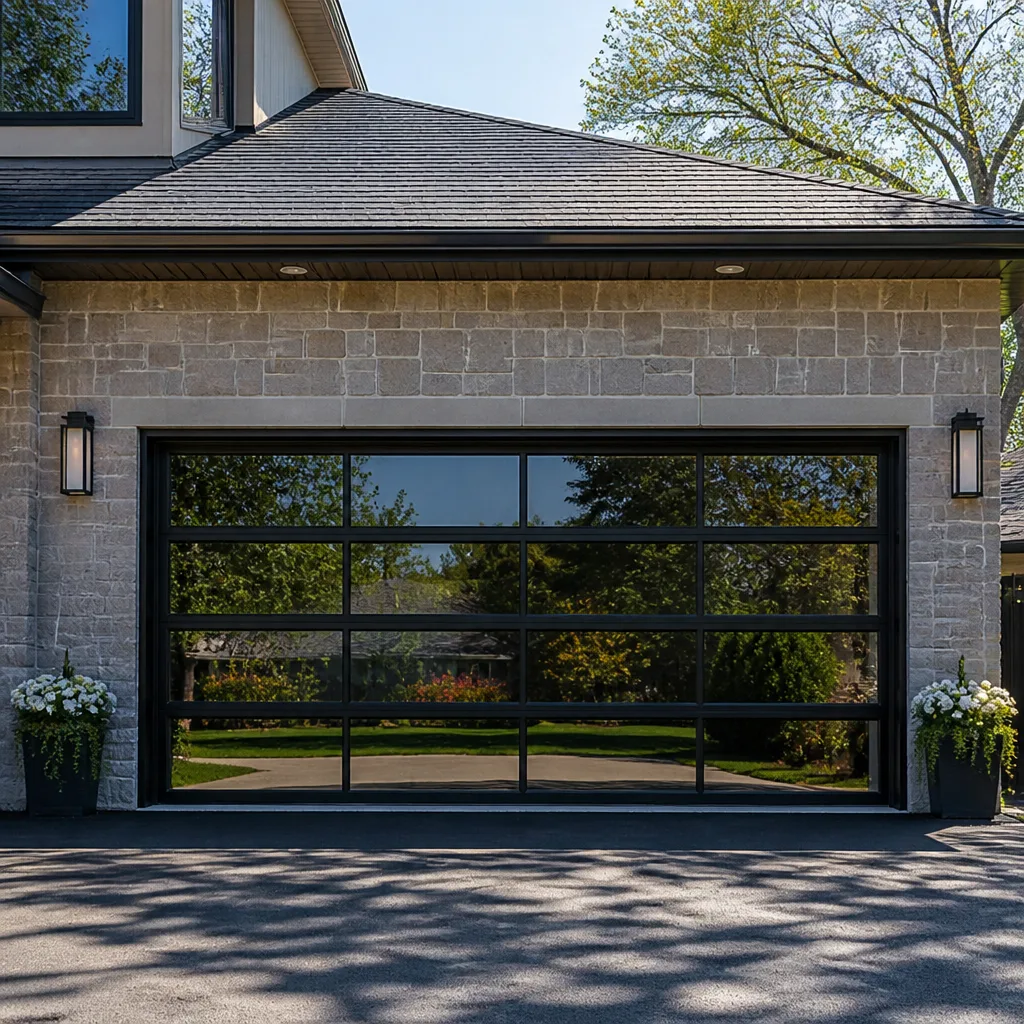 Full-view glass
 LiftMaster openers
 Chamberlain openers
Full 25-point door and opener safety check with every visit - springs, cables, rollers, tracks, and your LiftMaster or Chamberlain opener included
You get a price before we start. It does not change when the pro arrives.
Get your free estimateGarage Door Warning Signs: A Battle Creek Homeowner’s Reference Guide
Most garage door guides describe what a failing door looks like. That’s a problem, because by the time you can see the crack or the sag or the gap, the damage has usually been progressing for weeks. In our experience, homeowners in Battle Creek almost always hear a problem before they see it, and often feel it through the floor before either. A rhythmic click that wasn’t there last month isn’t a quirk in the motor. It’s usually a roller failing inside its bracket, and in a cold snap that frozen roller can snap a cable within days. This guide is built around the senses. You’ll learn what grinding, clicking, popping, and slapping each point to, how to tell a balance problem from a spring problem from an opener problem without touching anything dangerous, and which signs mean watch it versus which mean stop using the door today.
Quick Answer
Garage door warning signs fall into three risk tiers: watch-and-monitor (a new squeak, a little vibration, minor frost at the threshold), same-week service (grinding, uneven travel, a door that reverses before closing, visible spring gaps), and stop-using-the-door emergencies (a snapped spring, a hanging cable, a door that won’t stay up or has come off one track). Sound is your earliest signal. If you hear something new in Battle Creek, a trained technician can diagnose it before it becomes a cable or spring failure.
Styles & brands we work with
- Raised-panel steel
- Carriage house
- Modern flush
- Full-view glass
- LiftMaster openers
- Chamberlain openers
Table of Contents
- The Sound Index: What Each Noise Actually Means
- The Manual Disconnect Test: Spring, Balance, or Opener?
- The 6-Inch Test for Spring Wear
- Cold-Climate Warning Signs: Frost, Seals, and Rust Bleed
- Opener Warning Signs You Shouldn’t Ignore
- Watch, Book, or Stop: The Warning Sign Triage Guide
- Common Mistakes to Avoid
- When to Call a Professional
The Sound Index: What Each Noise Actually Means
Noise is the most reliable early indicator a garage door gives you, and it’s the one most homeowners dismiss the longest. A garage door is a mechanical system with dozens of moving contact points – rollers, hinges, bearings, springs, cables, and the opener’s drive assembly. Each one fails with a distinct sound signature. Learn to match the noise to the part, and you’ll know whether to call now or note it for later.
- Grinding: Metal-on-metal friction. Usually dry or seized rollers, worn bearings, or a torsion spring that’s lost its lubrication and is beginning to bind. Grinding that appears suddenly during cold weather often points to a roller or bearing that has stiffened with temperature.
- Clicking (rhythmic, once per panel): Almost always a roller that has cracked or come loose inside its hinge bracket. It clicks each time it crosses a hinge. In cold weather a failing roller can freeze in place and snap a cable within days, which is why clicking belongs in the book-this-week tier, not the wait-and-see tier.
- Popping (a single loud bang): This one has two causes, and they’re very different. A sharp, isolated bang may be a torsion spring breaking – an emergency. Popping that repeats as the door travels is more often a panel binding on a track or a hinge that has bent. If you hear one loud bang and the door won’t lift, stop using it.
- Slapping or flapping: The door’s panels or bottom seal are vibrating against the frame. Common causes are worn weather seal, loose hardware, or a door that has gone slightly out of balance and is rocking as it travels.
- Rattling that worsens over weeks: Loose track bolts or hinge screws working their way out. Left alone, this can shift the track out of alignment and cause the door to come off its rollers.
In Battle Creek, we hear a seasonal pattern in these complaints – the cold months turn a mild rattle into a grinding noise faster than homeowners expect, because metal contracts and lubricants thicken. If you can describe the sound and when it happens, the diagnosis starts before the technician arrives. That’s not a small thing: it shortens the visit and reduces the chance of replacing something that didn’t need replacing. Garage Door Repair Battle Creek offers free estimates in Battle Creek, and a technician will identify the real cause before recommending a fix.
The Manual Disconnect Test: Spring, Balance, or Opener?
One safe test tells you which of three systems is failing: the springs, the door’s balance, or the opener itself. It takes about two minutes, uses the manual release cord, and requires no tools and no contact with spring hardware. The point is to remove the opener from the equation and let gravity show you what’s wrong.
- Close the door fully and make sure no one is standing in the path.
- Pull the manual release cord (the red rope hangning from the opener carriage) to disconnect the door from the opener.
- Lift the door by hand about halfway, then let go.
- Observe what happens. A properly balanced door holds roughly where you leave it. If it drops, the spring tension is weak or the door is out of balance. If it’s very hard to lift by hand, the springs are too tight or the track is binding.
Now for the interpretation. If the door is heavy and won’t stay where you leave it, you’re looking at a spring or balance problem – the springs carry the door’s weight, and when they weaken, gravity wins. If the door is balanced and moves smoothly by hand but fails when reconnected, the opener is the likely culprit, whether it’s a Genie or Clopay-equipped door or any other brand. If the door is balanced but one side feels heavier or the door drifts to one side, the track is likely misaligned or a roller is worn.
Two safety points. First, do this test with the door disconnected, never with the opener engaged. Second, if the door feels dangerously heavy, moves abruptly, or you hear a bang during the test, re-engage nothing. Leave the door disconnected and call. High-tension torsion springs can store enough force to cause serious injury, which is why we treat spring work as a trained-technician job and never recommend a homeowner adjust them. If the disconnect test points to springs, that’s garage door repair territory, and it’s worth getting it looked at the same week rather than the same year.
The 6-Inch Test for Spring Wear
There’s a safe way to gauge spring wear without touching the spring hardware, and it uses the door’s own travel as your gauge. We call it the 6-inch test, and it’s the single most useful check a homeowner can perform. It works on torsion springs and extension springs alike, and it works on any brand – from LiftMaster openers paired with Amarr doors to Wayne Dalton and Clopay setups.
Here’s how it works. Close the door fully. Use a piece of tape or a pencil mark on the wall to note the position of the top of the door’s bottom panel, or note how much door is visible above the door opening. Now open the door fully and compare. A door that lifts a much smaller distance than it should – or a door that lifts but the opener’s rail barely progresses – points to a spring that has stretched or lost tension. On torsion springs, the coils lose their preload. On extension springs, the spring has stretched longer than it used to. A spring that has noticeably elongated is showing its age and is closer to failure.
What makes this test useful is timing. A spring rarely breaks without warning; it weakens gradually, and the door’s travel distance changes slowly enough that daily users don’t notice. The 6-inch test makes the change visible. Run it once a season, note the result, and compare next season. A change of a few inches over a year is a monitor sign. A big change in a month, or a door that has clearly lost lift, is a book-it-now sign.
Run this test with care. Don’t stand under the door, don’t reach into the spring area to feel for tension, and don’t try to adjust anything you find. The test tells you when to call, not how to fix. If the test shows significant loss, treat it as a same-week item – and a door that has lost substantial lift shouldn’t be used in the meantime, because the opener is now fighting a spring that can no longer help. Our technicians have up to 9 years of experience and can confirm spring condition on-site in minutes.
Cold-Climate Warning Signs: Frost, Seals, and Rust Bleed
A Battle Creek winter is harder on a garage door than any other season, and the signs show up in places homeowners don’t think to check. Cold weather work on a cold-climate door is really about three failure modes: frost intrusion, seal compression failure, and rust bleed on the panels. Each has a distinct visual tell, and each points to a different fix.
Frost intrusion patterns. Look at the threshold, the bottom corners, and the seam between panels. Frost or condensation forming on the inside of the door – or a visible cold-air line along the bottom – means the seal or the panel joint isn’t closing tight. On an insulated door, frost on the panels themselves suggests the door isn’t the thermal barrier it should be. Frost that appears only at the corners usually points to a weather seal that has hardened and shrunk; frost along an entire seam points to a panel alignment issue.
Seal compression failure. A weather seal is a soft rubber or vinyl strip that compresses against the floor when the door closes. When it hardens with age and cold, it stops compressing and starts leaving a gap. Check by closing the door and looking for light or a draft under the bottom seal. A seal that stays flattened or cracked after the door opens has lost its memory and needs replacement. This is a low-cost fix that pays back in heat retention and in keeping moisture out of the door’s interior.
Rust bleed on panels. Rust that streaks downward from a panel seam or a hinge is a sign of moisture sitting in a panel joint, usually because the seal above it has failed. In a cold-climate door, untreated rust can spread under the paint and split a panel’s skin. Early rust on a steel door is often manageable; late-stage rust that has penetrated the panel means the panel needs replacing. If you have a Clopay or Amarr steel door, look closely at the bottom panel first – it takes the most moisture from the floor.
These three signs are the ones homeowners most often miss in Battle Creek, because the door still opens and closes normally. But a door that keeps out the cold is a door doing half its job. Seal and panel checks belong on a fall maintenance routine, before the first hard freeze sets the damage in. If the frost intrusion is severe or you see water staining inside the garage, it’s worth a professional look – Garage Door Repair Battle Creek offers free estimates in Battle Creek to assess the seal and panel condition.
Opener Warning Signs You Shouldn’t Ignore
The opener is the brain of the system, and it fails with its own set of symptoms that homeowners often misread as a door problem. In our experience, an opener that’s struggling gets blamed on the door, and a door that’s out of balance gets blamed on the opener. Separating the two saves money. Here are the opener signs that matter.
- Lights flash but the door doesn’t move: Usually a safety sensor issue – misaligned or obstructed sensors on the door tracks. Check that the two lenses face each other and nothing blocks the path.
- The door reverses before closing, or reverses on the way up: The opener’s travel limits or force settings are wrong, or the safety reverse is triggering. This is often a sensor or limit-setting issue, but it can also signal a door that’s binding on the track.
- The opener strains or the door moves in short jerks: The opener is fighting a door that’s out of balance, its gear assembly is wearing, or its drive belt is loose. Letting this continue wears the opener out faster.
- Remote or wall button works intermittently: Battery, signal interference from an LED bulb in the opener’s light socket, or a failing logic board. Brand matters here, and a multi-brand technician can diagnose a Genie or Chamberlain unit as readily as a Craftsman or LiftMaster one.
- Grinding from the opener head: Usually a worn gear assembly or a dry drive rail. Grinding inside the opener is a service signal, not a maintenance chore.
One opener problem that catches Battle Creek homeowners specifically: a door that was fine in summer but struggles in winter. Cold thickens the opener’s lubricant and stiffens the door’s rollers and springs at the same time, and the opener hits its force limit and reverses – which reads as an opener failure but is often a door that’s gone out of balance. That’s where a source that handles both garage door opener repair and the door’s mechanical parts saves you the second call. We work on the opener brands most homes already have, so we’re not going to tell you we only service what we sell.
Watch, Book, or Stop: The Warning Sign Triage Guide
Every warning sign falls into one of three tiers, and getting the tier right is the whole point of diagnosis. Here’s the triage we use, in order from least to most urgent.
Tier 1 – Watch and monitor. A light squeak that lubricant would quiet, a rattle you can trace to a loose bolt, minor frost at the threshold, a small vibration that appears only in cold weather. These are real signs but not emergencies. Watch them and compare next month. If your monitoring shows the problem getting worse rather than staying stable, promote it to Tier 2.
Tier 2 – Book same-week service. Grinding during travel, rhythmic clicking, the door reversing before it closes, visible frost intrusion, a door that’s begun to drift to one side, a 6-inch test showing gradual spring loss. These mean a part is wearing toward failure. A technician can fix them now for a fraction of an emergency repair, before the fastener gives way or the cable snaps.
Tier 3 – Stop using the door. A snapped spring, a hanging or visibly stretched cable, a door that has come off one track, a door that won’t stay up, a loud bang followed by a door that won’t move, or a door that tilts as it travels. These are genuinely dangerous. A door in this condition is heavy enough to cause serious injury or property damage, and it should be left where it is until a trained technician has been out. A door that won’t close is also a security problem tonight, not next week – which is why emergency garage door service exists for failures that can’t wait for a scheduled appointment.
Here’s the part homeowners most often get wrong: they treat Tier 2 as Tier 1 because the door still works. A grinding roller that still moves is not “fine” – it’s failing while functional. The window between Tier 2 and Tier 3 can be short, especially in cold weather. If you’re not sure which tier a sign belongs to, err on the side of the earlier one. A free estimate is a much cheaper way to confirm the tier than a failed emergency repair.
Common Mistakes to Avoid
- Treating a new noise as “just the cold.” Some noises do quiet down when the weather warms, but a clicking roller or grinding bearing won’t fix itself, and in a Battle Creek cold snap the problem accelerates.
- Lubricating a torsion spring you haven’t had inspected. A spring that’s failing can look serviceable from a distance. Keep lubricants and shop rags away from spring hardware and let a technician assess tension – the springs store tremendous force.
- Skipping the manual disconnect test when the door misbehaves. Without the test, you can’t tell a spring problem from an opener problem from a balance problem, and a guess at the wrong system is money spent twice.
- Replacing the opener when the door is the problem. When a door goes out of balance in winter, the opener reverses before closing. A new opener won’t fix the balance. The fix is the springs and rollers, not the motor.
- Ignoring the bottom seal through winter. Seal failure is the quietest warning sign on the list, and it’s the one that lets moisture into the panels and starts the rust bleeding. Check it before the first freeze.
- Pushing through a Tier 3 sign to “get it closed.” A door with a snapped spring or a hanging cable should never be operated to test it. That’s the moment a repairable problem becomes a dangerous one.
- Calling a single-brand dealer when you have another brand. A fine with a Genie opener and an Amarr door is a common Battle Creek combination. A specialist trained on multiple brands diagnoses what’s actually there, not what they prefer to sell.
See the difference
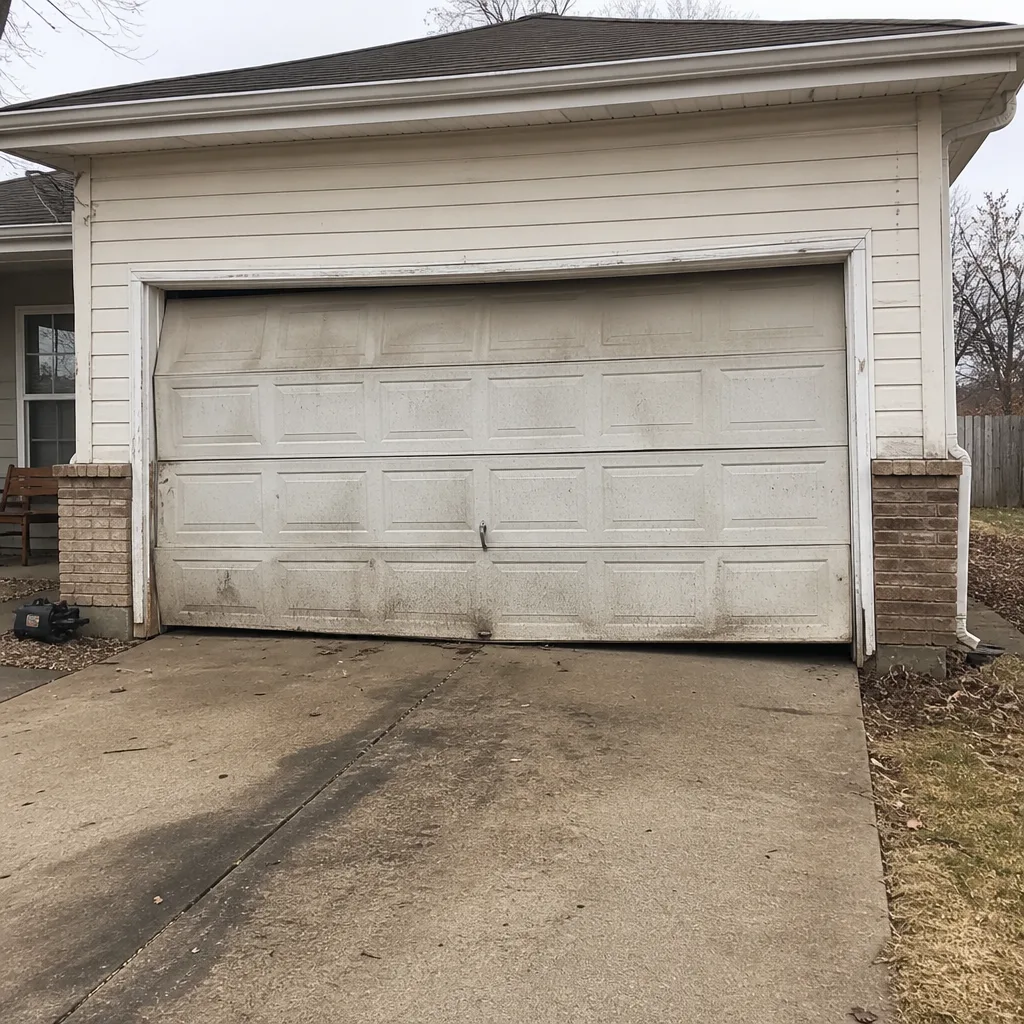 Before
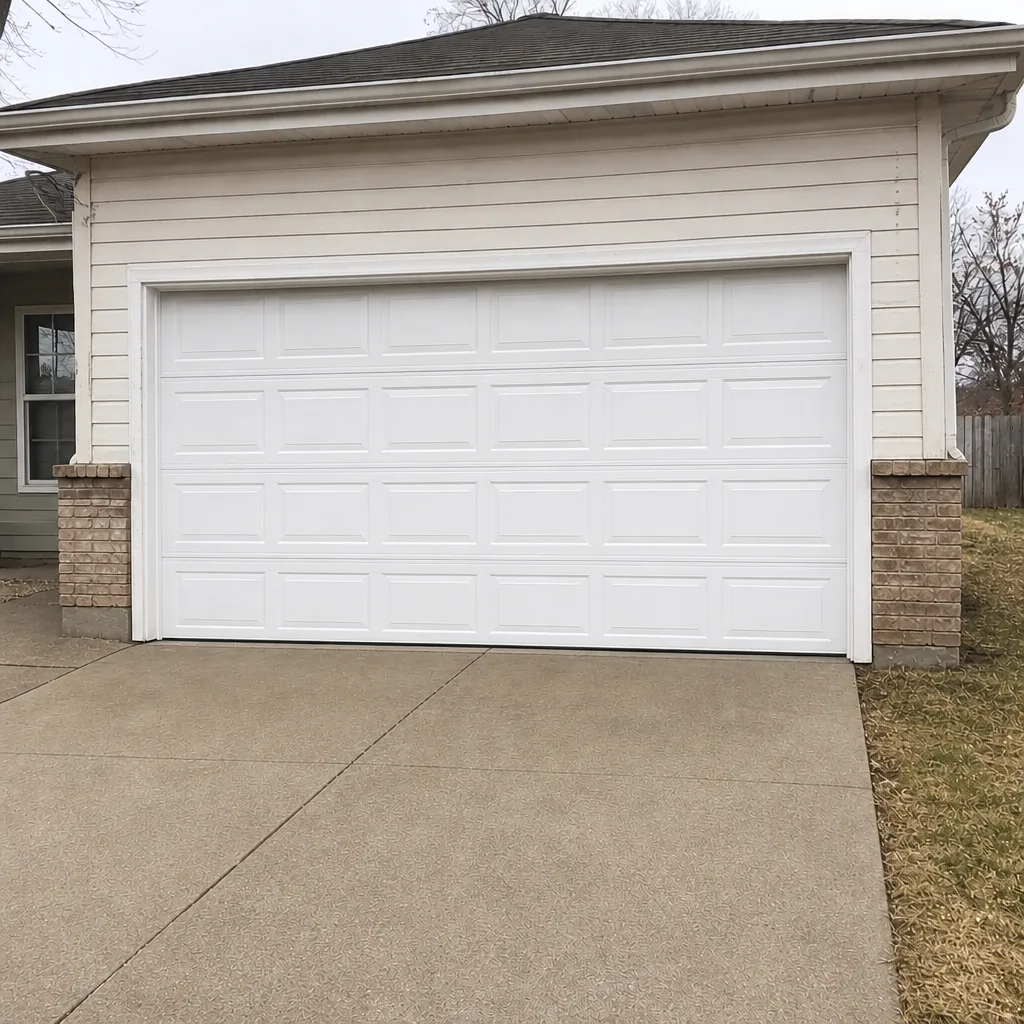 After
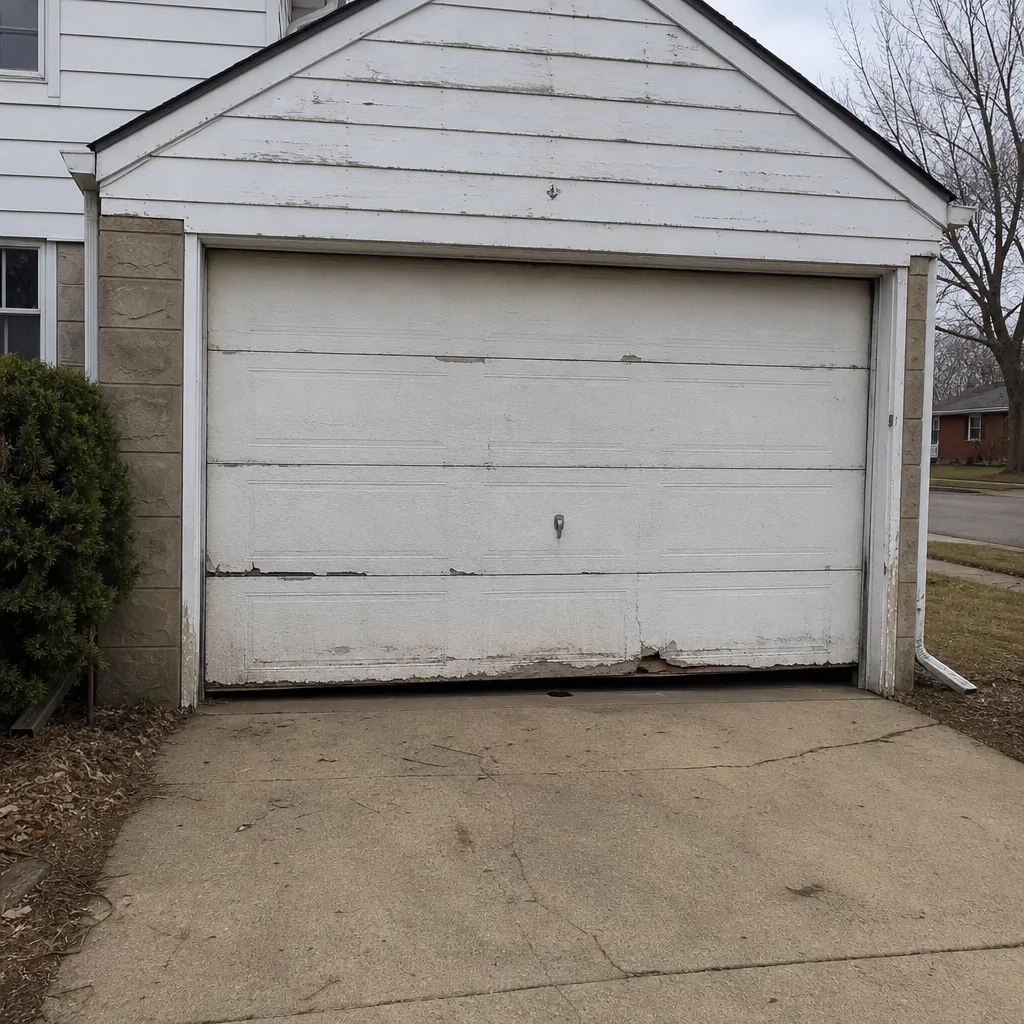 Before
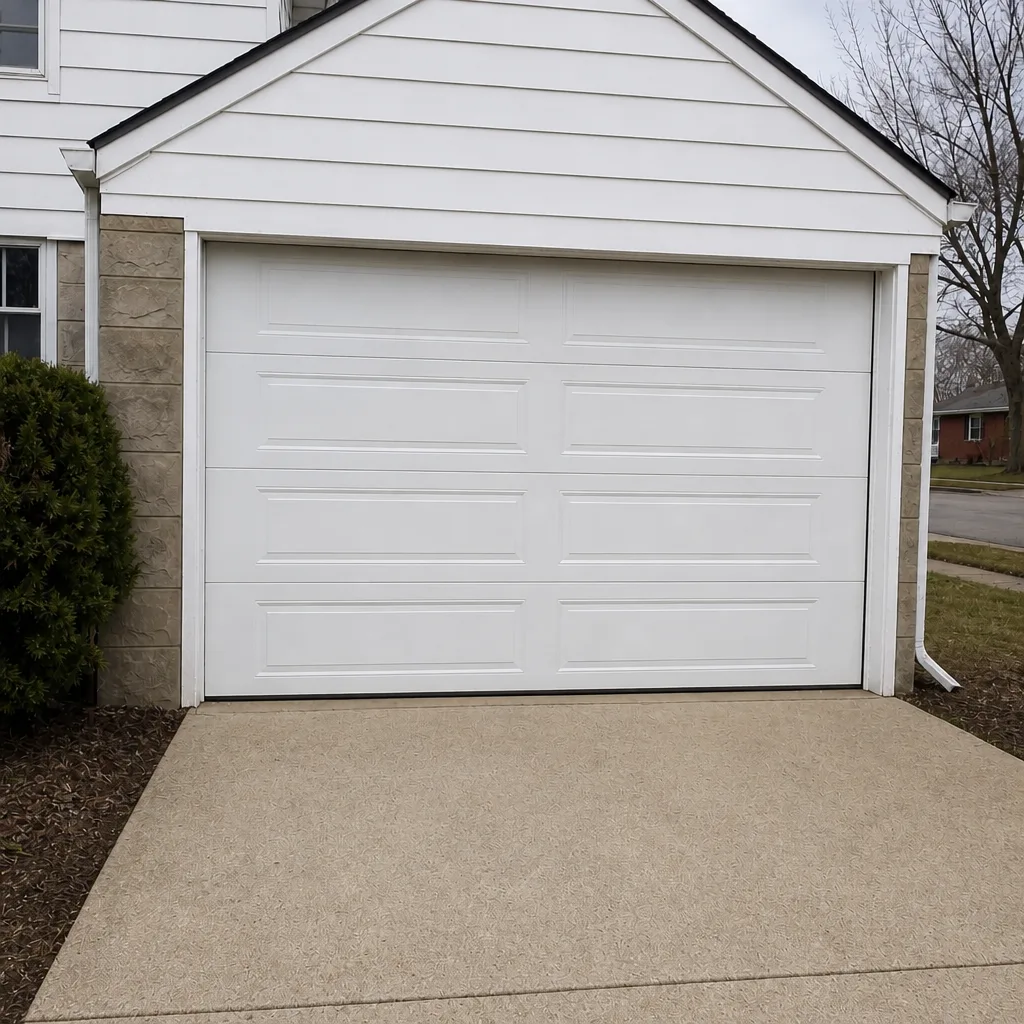 After
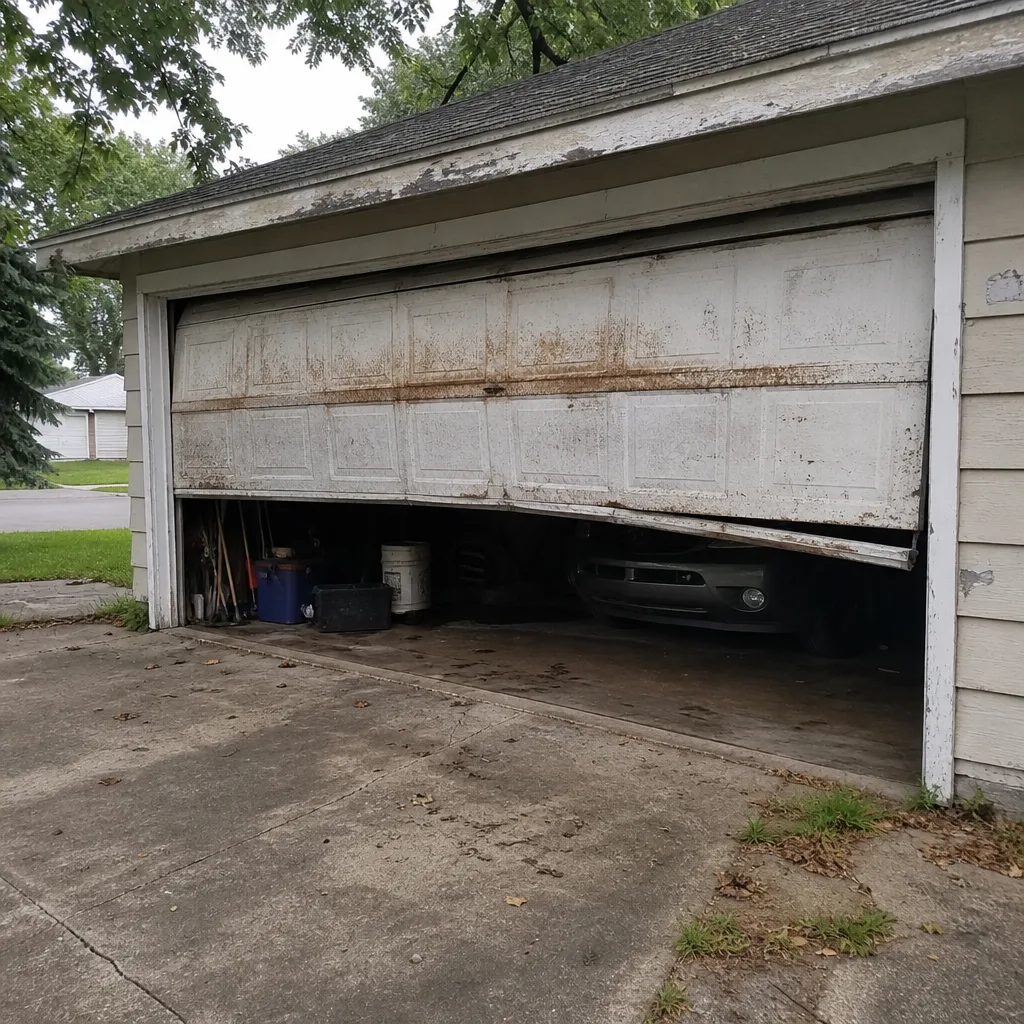 Before
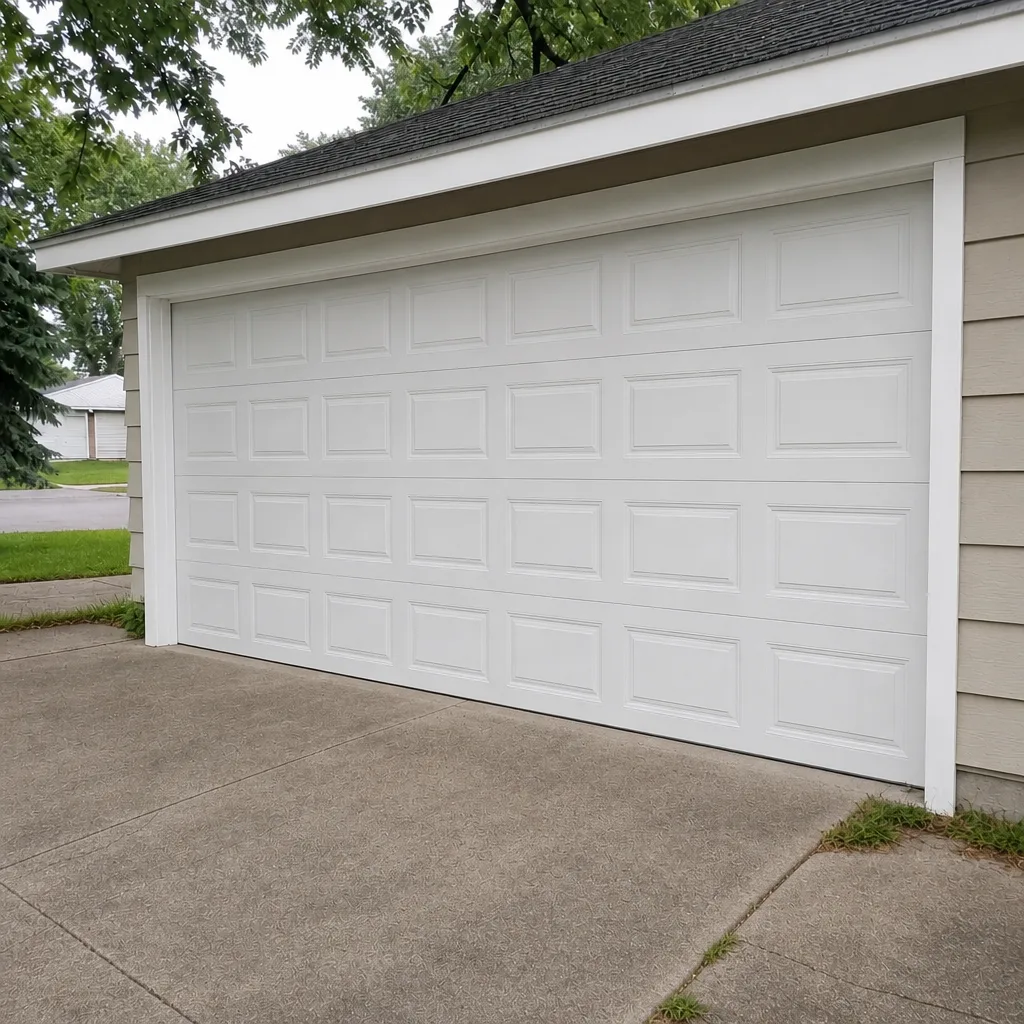 After
When to Call a Professional
Call a professional the moment a warning sign moves from Tier 2 to Tier 3 – or the moment you’re not sure. The signs that call for a technician now: a snapped spring, a hanging or stretched cable, a door that has come off its track, a door that won’t stay up, a loud bang followed by a door that won’t move, or a door that’s visibly tilting. Call for the same-week signs too: grinding, clicking, the door reversing, frost intrusion, and any 6-inch test result that shows clear spring loss.
The things you never want to do yourself: adjust torsion springs, touch a cable under tension, or force a door that’s left its track. Those are the jobs that send homeowners to the emergency room. Spring repair is genuinely hazardous, and a trained technician with the right tools is the only safe person for the job. Our technicians handle spring work in-house, so you’re not passed to a second company. Garage Door Repair Battle Creek offers free estimates in Battle Creek – call (844) 964-0574 to book a diagnostic visit or a free measure for a fix that’s turning into a replacement.
Frequently Asked Questions
A broken spring gives you a door that won’t lift at all, or a loud bang you heard when it failed – it’s a stop-using-the-door sign. A weak spring gives you a door that still moves but has clearly lost lift and may reverse. Use the 6-inch test to compare door travel over time, and if the door has lost substantial lift, treat it as a same-week call. Call (844) 964-0574 for a free estimate – a technician can confirm the condition in minutes.
A rhythmic click, once per panel as the door travels, usually means a roller has cracked or come loose inside its hinge bracket. It’s not a minor annoyance – in cold weather a failing roller can freeze and snap a cable within days, so it belongs in the book-this-week tier, not the watch tier. Call (844) 964-0574 to get it looked at before a cold snap turns it into a cable failure.
Yes, with care. Pull the release cord with the door fully closed, lift the door halfway by hand, and let go. A balanced door holds where you leave it; a door that drops points to weak springs or balance, and a door that’s hard to lift points to tight springs or a binding track. Leave the door disconnected if it feels heavy or behaves dangerously, and call (844) 964-0574 – don’t try to adjust spring tension yourself.
It shows whether your door’s travel has shortened relative to the door opening, which points to a spring that’s losing tension before it fails. A spring rarely breaks without warning – it weakens gradually, and the 6-inch test makes that change visible. Run it once a season, note the result, and compare. If it’s changed substantially in a short time, call (844) 964-0574 for a free estimate.
A door that reverses before closing in cold weather is usually a door that’s gone out of balance, not a failing opener. Cold thickens the opener’s lubricant and stiffens rollers and springs at the same time, and the opener hits its force limit and reverses. Check the safety sensors first, then get the door’s balance assessed. Call (844) 964-0574 – a source that handles both opener and door problems will diagnose the real cause.
Repair is usually the right call when the problem is mechanical – a spring, roller, cable, track, or seal. Replacement makes sense when a panel is structurally damaged, rust has penetrated a panel, or the door no longer fits the opening. A free estimate in Battle Creek can tell you which path is correct. For a full replacement, spring for a free measure and a written quote rather than a rushed decision – call (844) 964-0574 and we’ll talk through the options, including garage door installation if the repair isn’t the economical choice.
The Bottom Line
Garage doors almost always tell you they’re in trouble before they fail. The sound tells you first – grinding, clicking, popping, slapping – and the manual disconnect test and the 6-inch test tell you which system to blame. In cold-climate Battle Creek, watch the frost, the seals, and the rust bleed through the winter months, and don’t dismiss a clicking roller or a grinding bearing as “just the cold.” Sort every sign into one of three tiers: watch, book same-week, or stop using the door. Get the tier right and you’ll spend less, stay safe, and keep the door working rather than replacing it out of emergency.
If something you’re hearing or feeling has you unsure, one call covers it. Garage Door Repair Battle Creek handles repair, opener repair, spring repair, and full installation – so the diagnosis and the fix happen in one place. Call (844) 964-0574 for a free estimate. We identify the real cause before recommending a fix, and the price is quoted and agreed before any work starts.
Written by the team at Garage Door Repair Battle Creek.