Last updated November 21, 2026
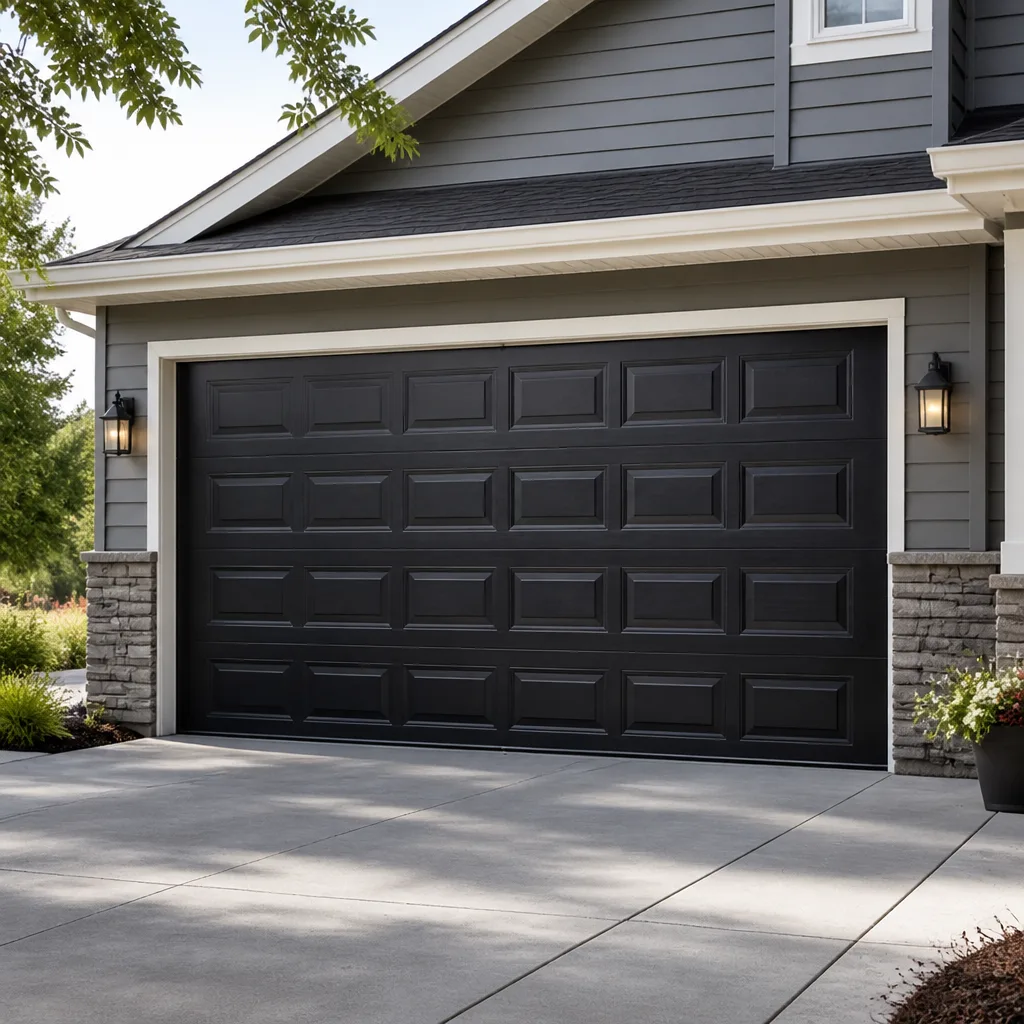 Raised-panel steel
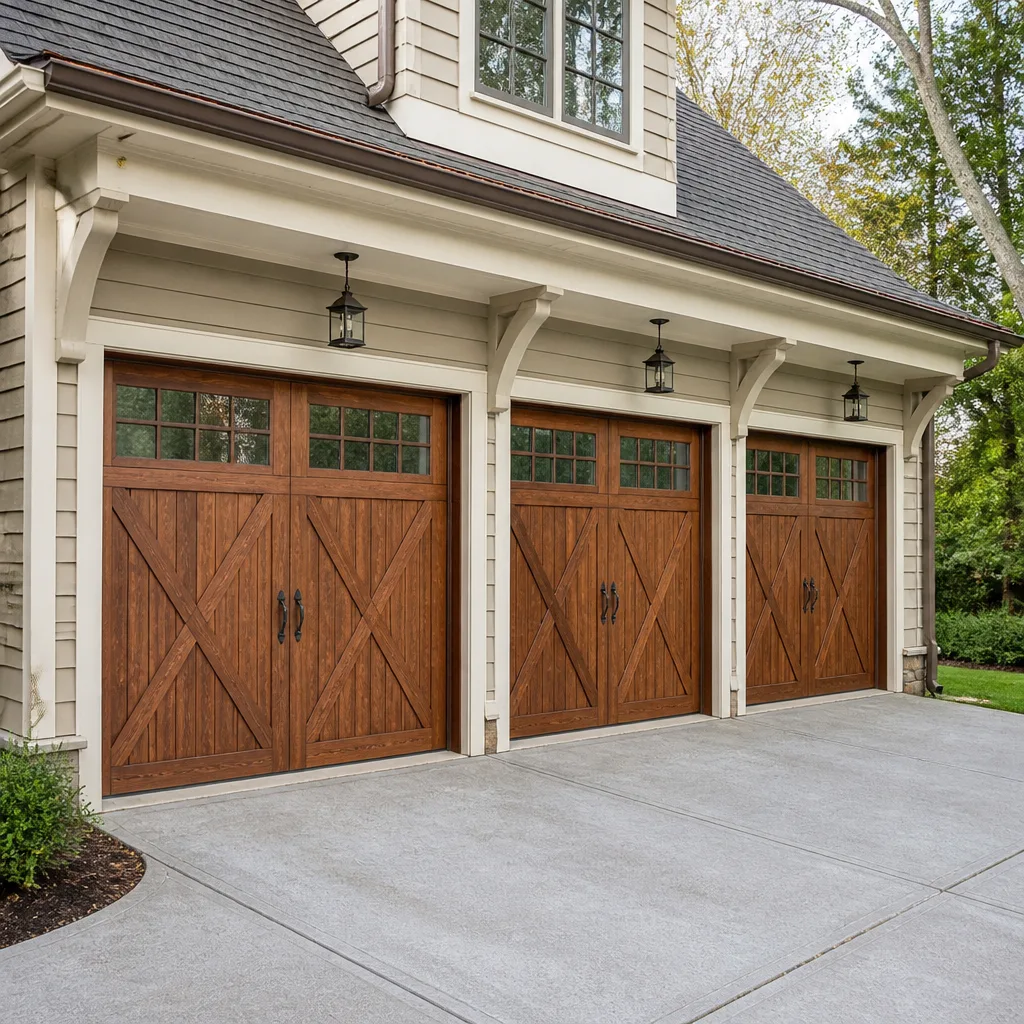 Carriage house
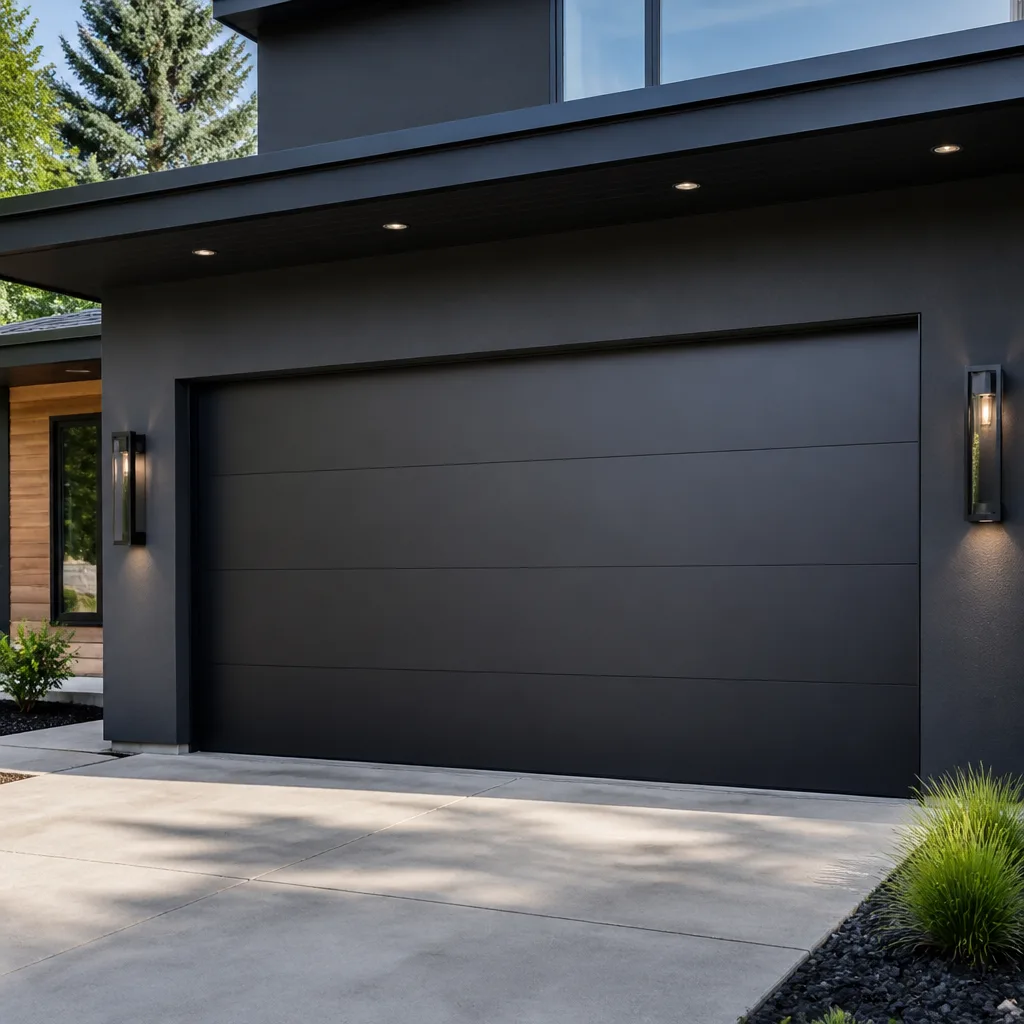 Modern flush
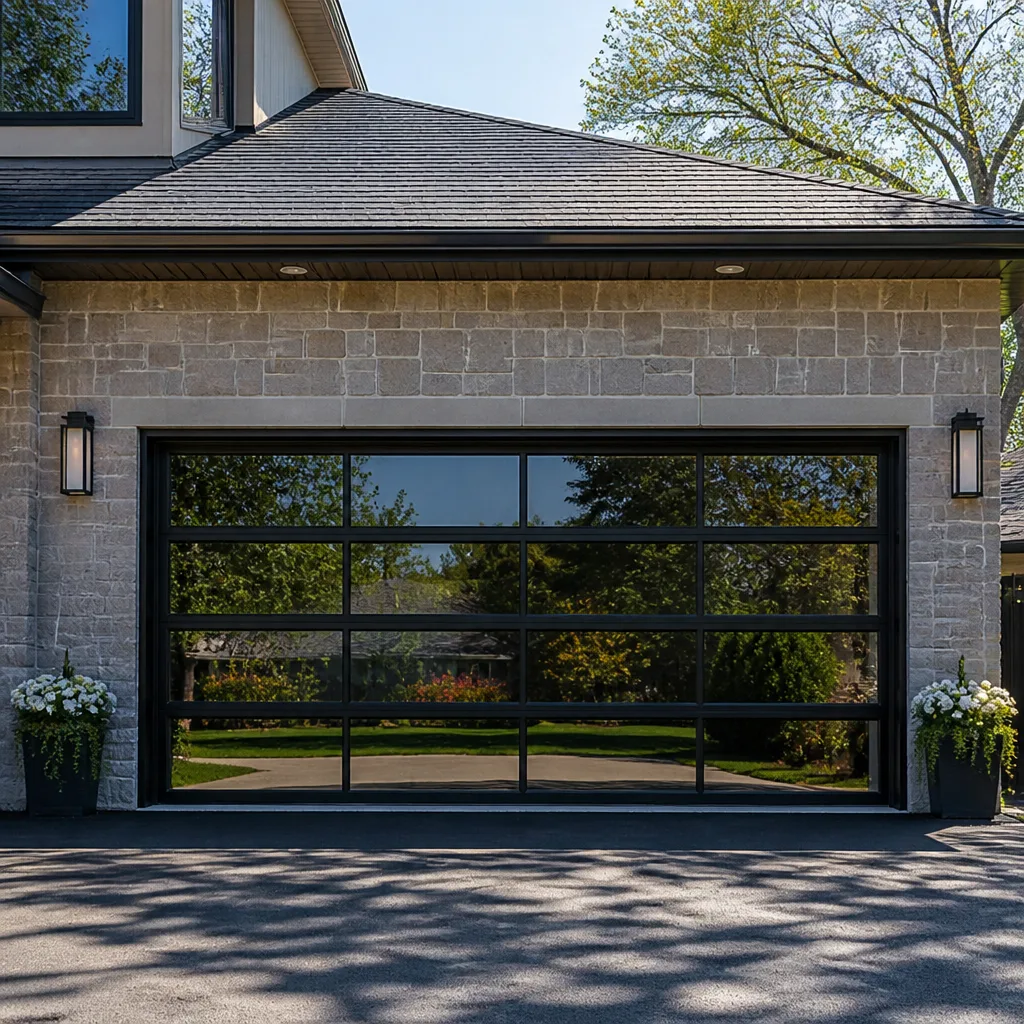 Full-view glass
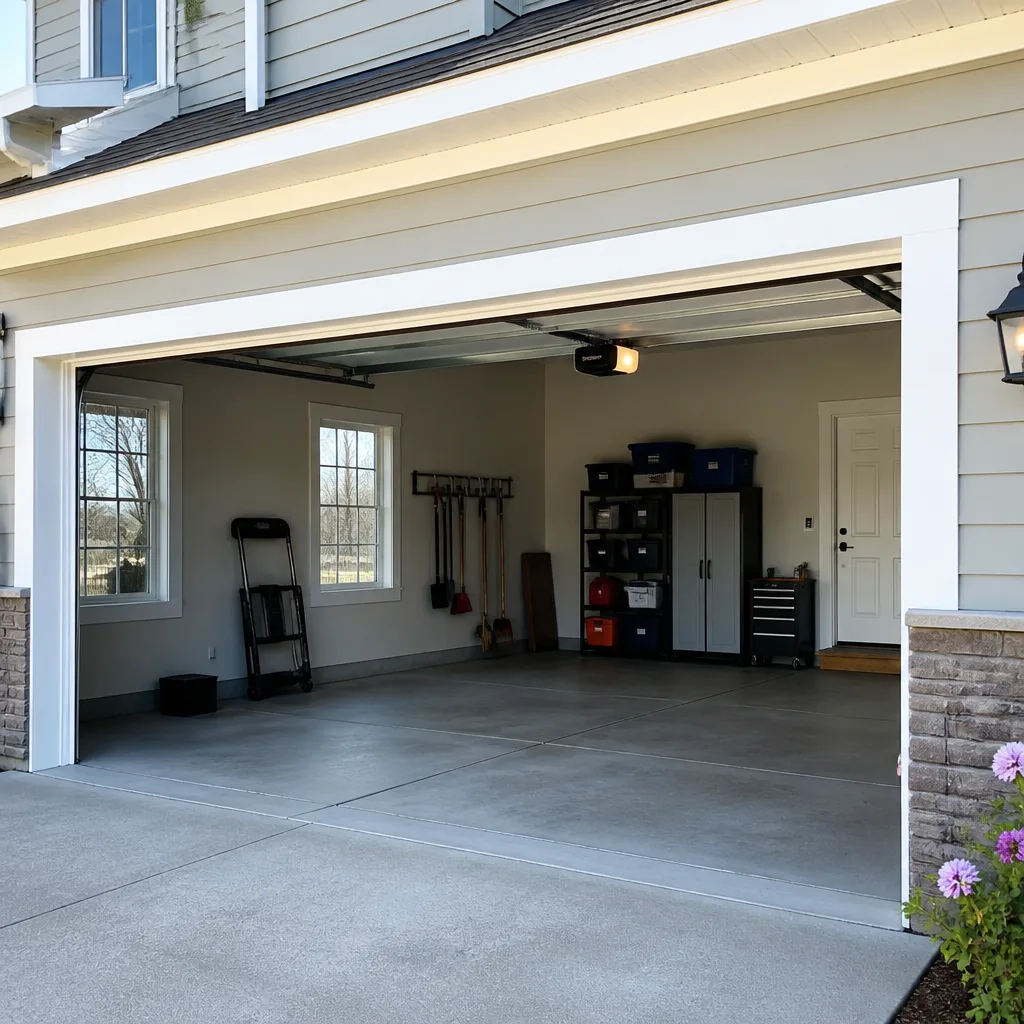 LiftMaster openers
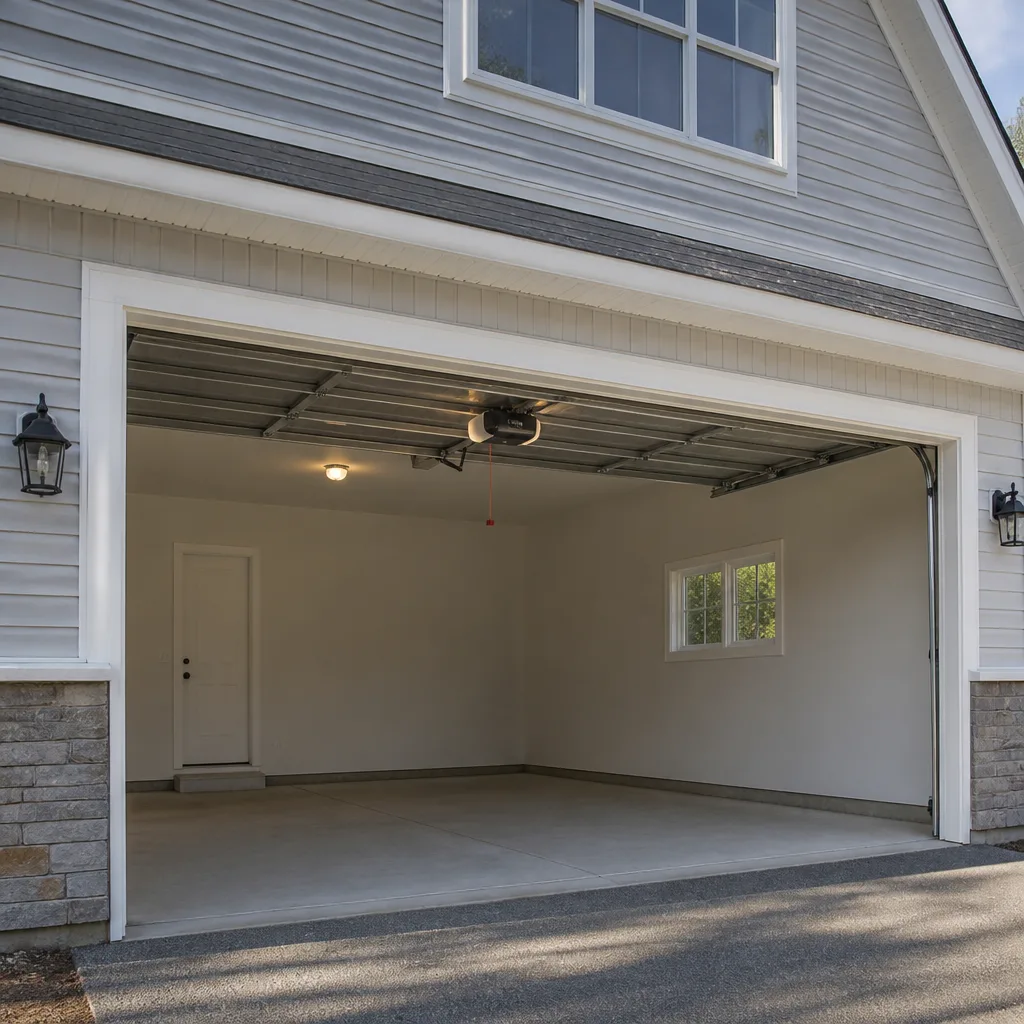 Chamberlain openers
Full 25-point door and opener safety check with every visit - springs, cables, rollers, tracks, and your LiftMaster or Chamberlain opener included
You get a price before we start. It does not change when the pro arrives.
Get your free estimateGarage Door Cost Breakdown: The Battle Creek Homeowner’s Reference for 2026
Two steel doors can look identical from the curb and carry an $800 difference in price. That gap almost never comes from the panel style. It comes from insulation R-value and steel gauge, the two specs that decide how a door behaves through a Minnesota winter and how it feels when you lift it by hand. We’ve watched Battle Creek homeowners get quoted by three companies and come away with three numbers and no way to compare them. This guide fixes that. Instead of a single wide range that means nothing for your garage, we break cost down by decision point: material, insulation tier, opener class and labor scope. Build your own number first, then check it against a quote.
Quick Answer
A typical garage door replacement in Battle Creek runs roughly $1,900 to $5,500 for the door and installation combined, with most single-car replacements landing near the lower end and insulated double doors pushing toward the top. Adding a new opener usually adds $450 to $1,200 depending on drive type and horsepower. The written estimate you receive after a measure is the price that stands, and it should be free.
Styles & brands we work with
- Raised-panel steel
- Carriage house
- Modern flush
- Full-view glass
- LiftMaster openers
- Chamberlain openers
Table of Contents
- How much does a garage door replacement cost in Battle Creek?
- Cost by door material and gauge: where the $800 difference lives
- Insulation tiers and the Minnesota payback math
- Opener cost tiers: drive type, horsepower and smart controls
- Labor cost variables most quotes bury
- Repair vs. replace: a framework for older doors
- What a legitimate Battle Creek quote looks like
- Common mistakes to avoid
- Frequently asked questions
How much does a garage door replacement cost in Battle Creek?
Garage door replacement in Battle Creek typically costs $1,900 to $5,500, door and install together, and a new opener or spring work adds to that figure. Here’s how the total splits by what you’re actually buying.
- Single-car, single-layer steel door, installed: roughly $1,900 to $2,800
- Single-car, insulated double-layer or triple-layer, installed: roughly $2,600 to $3,600
- Double-car, single-layer steel, installed: roughly $3,000 to $4,200
- Double-car, insulated triple-layer, installed: roughly $4,000 to $5,500
- New opener, standard chain or belt drive: roughly $450 to $800 installed
- New opener, higher-horsepower or smart-connected: roughly $700 to $1,200 installed
- Haul-away and disposal of the old door: roughly $75 to $175
- Old torsion spring replacement, per spring: roughly $180 to $340
New door work in Battle Creek is measured, ordered and scheduled, not squeezed into an afternoon. That means the timeline matters less than getting the spec right. When you book a measure, the installer records your opening width and height, headroom, ceiling drops, the condition of the header, and where the opener rail needs to land. Those measurements decide whether a stock size fits or a custom-width door is required, and custom width is one of the quieter reasons one quote comes in higher than another. There’s no reason to price a replacement blind over the phone. A free measure and a written quote is how this job should start.
Cost by door material and gauge: where the $800 difference lives
Steel dominates Battle Creek driveways, and within steel there are three construction types that price differently by hundreds of dollars. Gauge matters nearly as much as insulation. A heavier-gauge steel faces dents better, but it also adds weight, and weight changes what your springs and opener need to carry.
- Single-layer steel: one steel skin per side with a hollow core. Lightest and least expensive. Common on builder-grade homes and unheated detached garages. Dents show sharper because there’s no interior backing.
- Double-layer steel: steel faces with a bonded polystyrene core. Adds rigidity and some thermal resistance, and the sound deadening is noticeable. A good middle path for a garage you walk through several times a day.
- Triple-layer steel: steel inside and out with a polyurethane or polystyrene core between. The stiffest and quietest of the three, and the only tier where insulation values get serious. Pricier by roughly $500 to $900 over a comparable single-layer door.
Steel gauge is usually described as 24, 25, or 26 gauge, and lower numbers mean thicker steel. Two quotes for “an insulated steel door” that differ by $700 are often one gauge apart plus a panel-thickness difference. Ask each company to state gauge, core material, and R-value in writing. If a quote won’t name them, that’s the quote to set aside.
Wood and composite doors cost more than steel, generally $3,500 and up installed for a single-car size once staining or factory finish is included, and they need periodic refinishing in a climate that swings from humid summer air to hard freeze. Aluminum is light and rustproof but dents easily and rarely justifies its price on a residential door. For most Battle Creek homes, steel at double or triple layer is the value point.
Insulation tiers and the Minnesota payback math
Insulation is the single most common reason two similar-looking doors differ in price, and in Battle Creek it’s the upgrade that earns its money. A garage is usually attached, often shares a wall with living space, and sometimes has a bedroom above it. Whatever the door lets through, the house feels.
Here’s the practical reasoning rather than a promise of exact savings. An uninsulated single-layer door is essentially a thin steel panel with air behind it. In January that surface gets cold enough to condense moisture on mild days, and the cold radiates into any room sharing that wall. An insulated door with a bonded core slows that transfer, cuts the drafts around a room above the garage, muffles street noise and the door’s own operation, and keeps the garage itself warmer, which matters if a water heater, washer or freezer lives out there.
Where the payback is real:
- Attached garage with living space above or beside it: insulated is worth it. This is the majority of Battle Creek housing stock.
- Garage used as a workshop or gym through the winter: insulated is worth it for comfort alone, even before energy.
- Detached, unheated, storage-only garage: a single-layer door is a reasonable call. Skip the insulation premium and spend it on hardware quality.
One more winter detail. Insulated doors are heavier, and a heavier door needs springs sized for that weight. If you upgrade a door without matching springs and an opener rated for the load, you’ve traded a thermal problem for a mechanical one. Any install quote should confirm the springs and opener are spec’d to the new door’s weight, not the old one’s.
Opener cost tiers: drive type, horsepower and smart controls
Most Battle Creek garages need a belt-drive opener at ¾ horsepower with basic safety reversing and a battery backup. That’s the tier we’d point a typical homeowner toward, and everything above it is a choice, not a requirement. Here’s how the tiers break down.
- Chain drive, ½ horsepower. Roughly $450 to $650 installed. Loud, but durable and inexpensive. A fair fit for a detached garage where noise doesn’t carry into the house.
- Belt drive, ¾ horsepower. Roughly $600 to $850 installed. Quieter operation, smooth start and stop, and enough lift for an insulated double door. This is the sweet spot for most attached garages in Battle Creek.
- Belt or screw drive, 1 horsepower and up, with smart-home connection. Roughly $700 to $1,200 installed. Worth it for a heavy door, a tall opening, or a homeowner who genuinely wants phone alerts and remote opening. If smartphone control is a novelty you’ll use twice, the money buys more value in door insulation.
- Jackshaft or side-mount openers. Priced with the higher tier. These mount beside the torsion shaft instead of overhead, which matters in a garage with low ceiling clearance or a storage lift above the door.
Brand matters here for a practical reason: not every shop works on every opener. We’re trained on LiftMaster, Chamberlain, Genie, Craftsman, Raynor and the other major lines, so a homeowner with existing hardware isn’t told “we only service what we sell.” If your current opener is a brand a single-line dealer won’t touch, that’s not a reason to replace a working unit.
One safety point worth stating plainly: opener repair involves springs, cables and a machine that lifts hundreds of pounds above where people stand. A door that reverses inconsistently or a cable that has jumped its drum is a trained-technician call, and garage door opener repair should start with a proper diagnosis rather than a parts swap. The same caution applies to the door itself, and garage door repair on a binding or off-track door is not a ladder project.
Labor cost variables most quotes bury
Two quotes for the same door can differ by several hundred dollars purely on labor scope. Here’s what actually moves the labor number.
- Single vs. double door. A double door is heavier, needs heavier springs and often a second opener, but the install itself isn’t twice the work. Expect a double to run roughly 50 to 70 percent more in labor, not 100 percent.
- Haul-away and disposal. Roughly $75 to $175. Ask whether it’s included. Old doors are awkward, heavy, and a pain to get rid of on your own.
- Header and frame work. If the opening has settled, the trim is rotted, or the header needs sistering, expect added labor in the $150 to $600 range depending on scope. In a climate with deep frost and repeated freeze-thaw, garage openings do move, and an installer who ignores a soft header is setting you up for a door that binds within a season or two.
- Electrical rough-in. A new opener needs a working outlet near the ceiling. If there isn’t one, an electrician runs the circuit first; that’s outside the door installer’s scope and typically runs $200 to $500 depending on the run.
- Track and hardware replacement alongside a new door. Usually bundled, but sometimes quoted separately. Confirm what’s included.
The rule that protects you: no work starts before the price is quoted and agreed. On a replacement this is straightforward because everything is measured in advance. On a repair, the technician diagnoses first, then quotes, then works. You approve the number before anyone turns a wrench. That’s the answer to the worry that a quote will grow once the door is apart.
Repair vs. replace: a framework for older doors
Repair vs. replace isn’t about age alone. A twelve-year-old door with sound panels and good hardware is often worth repairing indefinitely. A twenty-year-old door with a rusted bottom section, tired springs, worn rollers and a failing opener is a different math problem. Use this framework.
- Add up the parts cost of what’s actually broken. Springs, cables, rollers, hinges, a bent track section, an opener circuit board. Get that number.
- Compare it to the cost of a new door of the same tier. If the repair for one failure is under about a quarter of a new door’s installed price, repair. If it’s approaching half and the door is showing several other wear items, the replacement math tilts.
- Check for structural problems. Rust through the bottom panel, delamination of the facing, a split or soft section, an out-of-square opening. These aren’t repair items. They’re replacement signals, because parts won’t make a failing panel sound again.
- Check the sequence of failures. One spring breaking after many years of service is normal wear. Springs breaking repeatedly suggests weight, balance or install problems, and that’s a conversation about the door, not the spring.
- Factor in what you wanted anyway. If the door already let drafts through and you’ve been meaning to insulate, the repair-or-replace question is really a replacement question with an upgrade attached.
We identify the real cause before recommending a fix, which means a technician who finds a worn roller will quote a roller, not a door. If the honest answer is that a repair buys you a year when you were ready to upgrade, you’ll hear that too. It’s your call either way, and the quote comes before the work. A full replacement, when it’s the right path, is handled through garage door installation with the same measure-first process.
What a legitimate Battle Creek quote looks like
A good quote is itemized enough that you can compare it line by line to another one. If a competitor’s quote is a single number on a business card, you can’t compare, and that’s the point. Expect these line items:
- Door model, size, gauge and construction type. Single, double or triple layer, with the R-value stated if it’s an insulated door.
- Color and window options, listed separately. Windows add cost. Get the number.
- Springs, sized to the door’s weight. If springs aren’t listed, ask. They’re the part that does the real work.
- Tracks and hardware, new or reused. State which.
- Opener, if included. Brand, model, drive type and horsepower, plus whether safety reversing sensors and battery backup are included.
- Labor, installation and haul-away. Itemized or clearly bundled, but stated.
- Any permit note. Most cities require one for structural or header work; ask your city’s building department directly, and ask the installer what they handle.
- The written price and the terms. The estimate is the number that stands. Anything discovered mid-install should be quoted to you for approval before the work continues.
Add-ons that are rarely worth it: high-end decorative hardware on a door that faces an alley, smart-home integration if nobody in the house uses an app, and premium finishes on a north-facing door that takes weather. Add-ons that usually are worth it: upgraded rollers for a quieter door, a properly sized opener, and insulation if the garage shares a wall with the house. If a quote arrives with a long add-on list and no line for springs or gauge, ask the questions before signing.
Common Mistakes to Avoid
- Comparing quotes without checking gauge and R-value. Two “insulated steel doors” can be two different products. Make each company put gauge and R-value in writing so the comparison is real.
- Replacing a door but keeping the old springs. New doors weigh differently. Old springs sized for the old door will wear fast or fail outright. Springs get matched to the door, every time.
- Letting an opener be swapped on a binding door. A door that binds will burn out a new opener. Fix the door’s balance and tracks first, then judge the opener.
- Attempting spring replacement yourself. Torsion springs are under extreme tension and can injure badly. This is the one repair where the honest answer is always “call a technician,” and we offer spring repair as a core service for exactly that reason.
- Skipping the measure on a replacement. Ordering a stock-size door without measuring headroom and opening dimensions is how a “simple” replacement turns into a return and a delay. Insist on a free measure before a commitment.
- Ignoring a soft header or rotted trim. In Battle Creek’s freeze-thaw cycles, a garage opening that has moved will make a new door bind. Fix the frame before the door goes on.
- Paying a deposit on an unsigned number. You should have a written estimate in hand before any money changes hands. Free estimates exist because a good company wants you to have the number first.
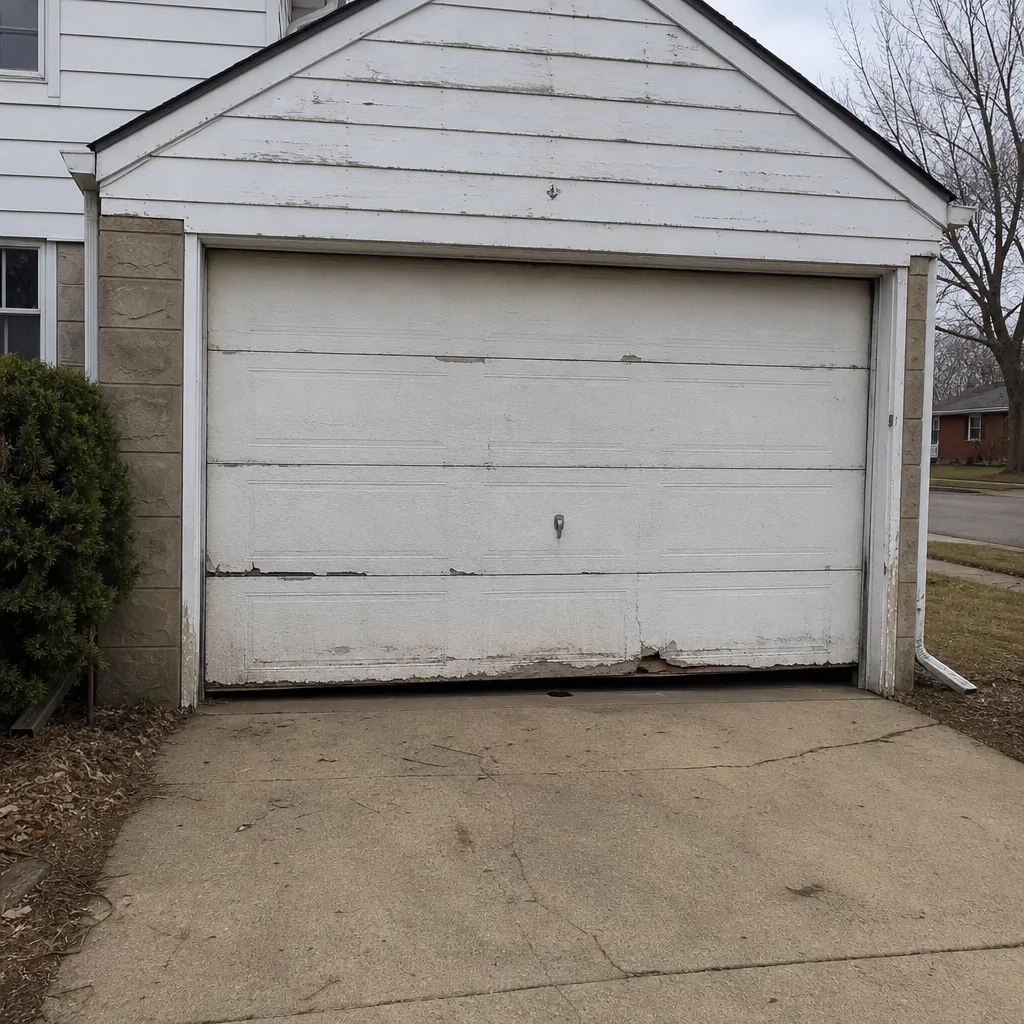
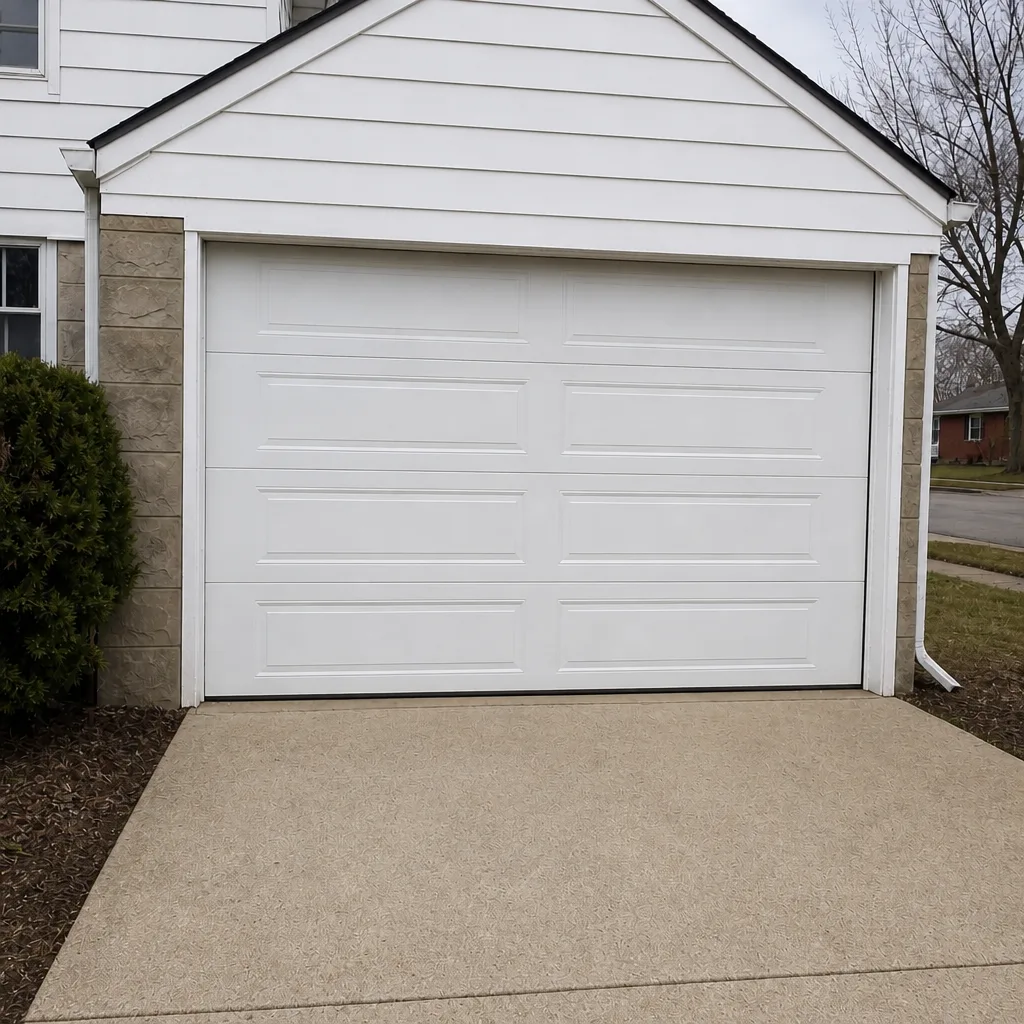
See the difference
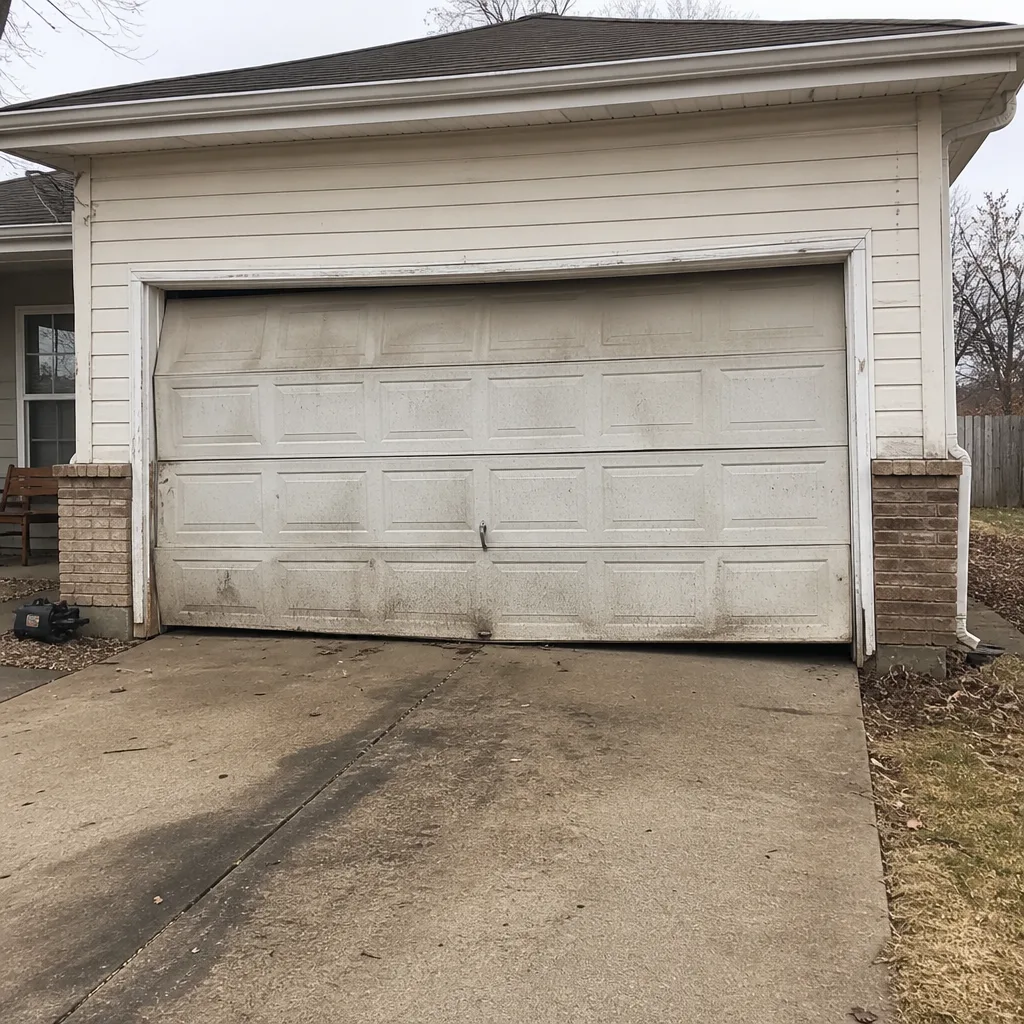 Before
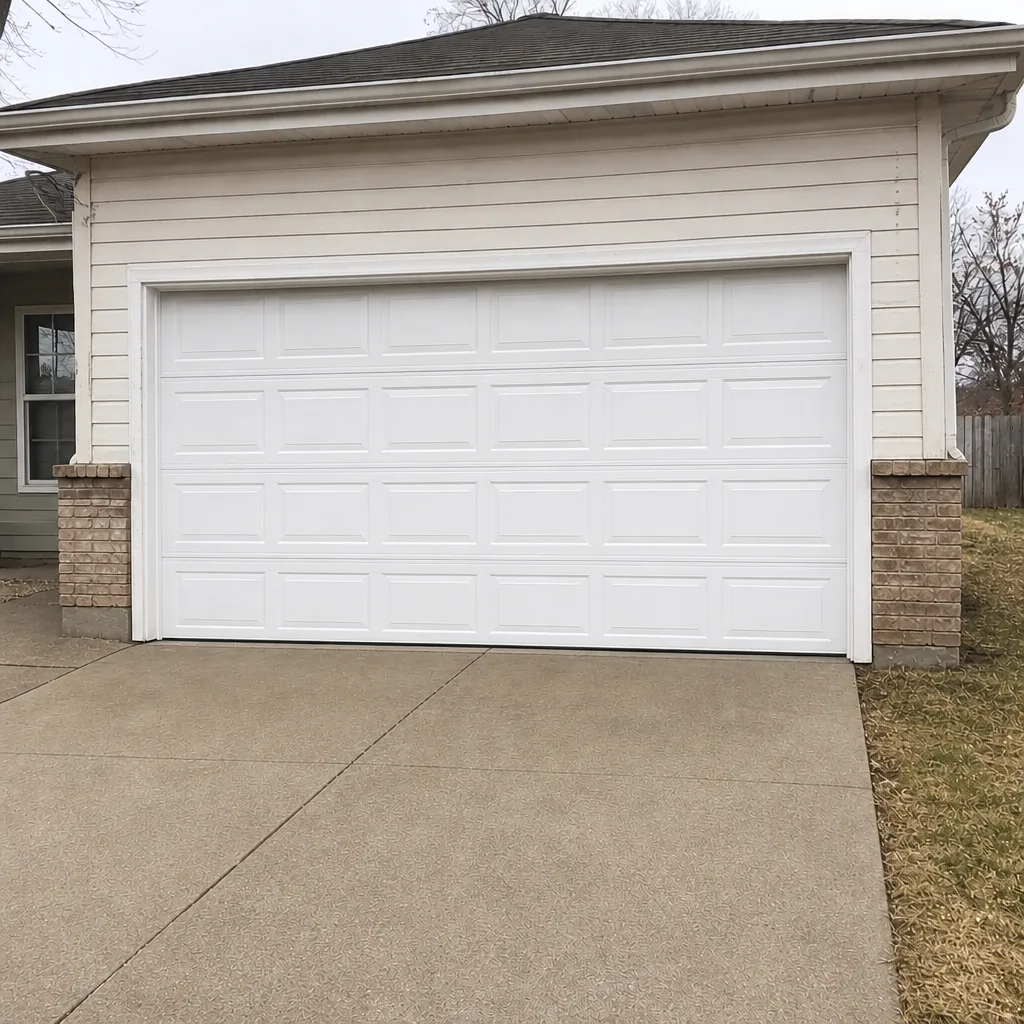 After
 Before
 After
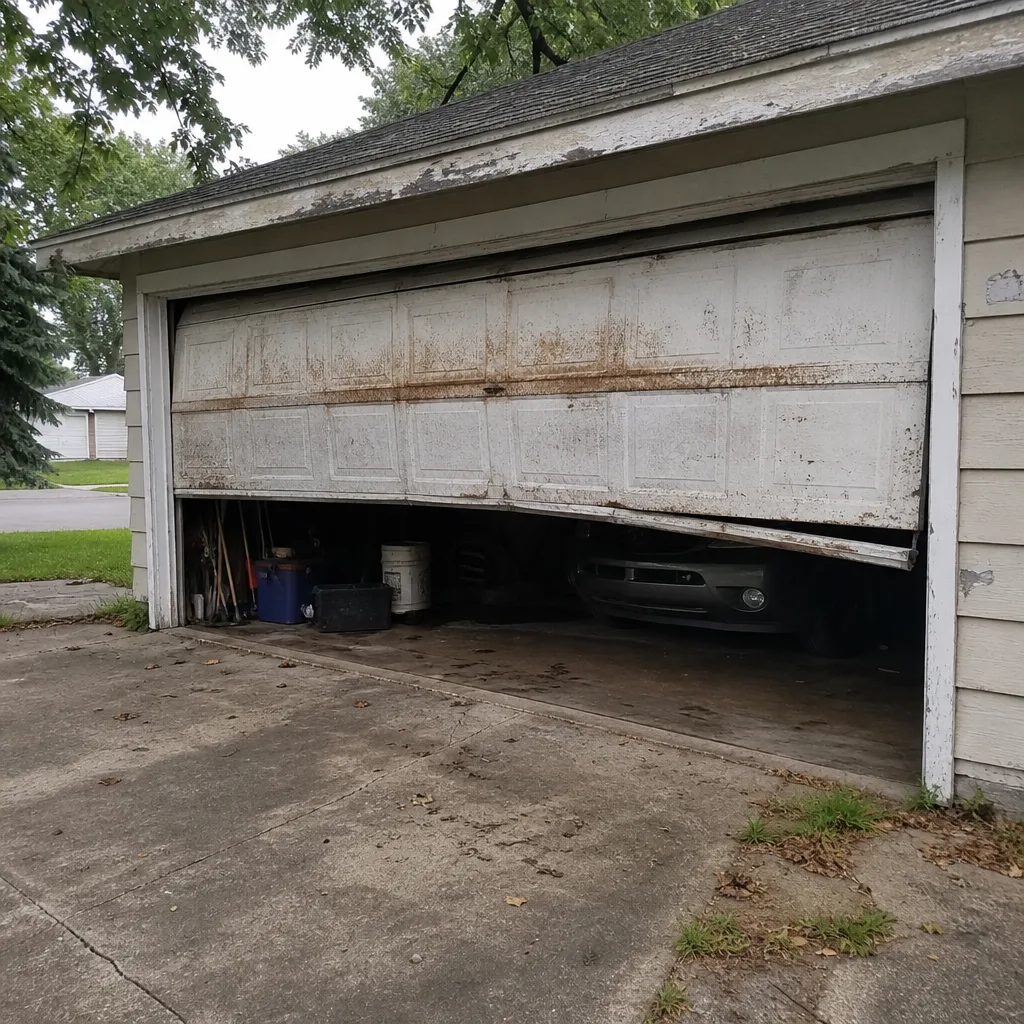 Before
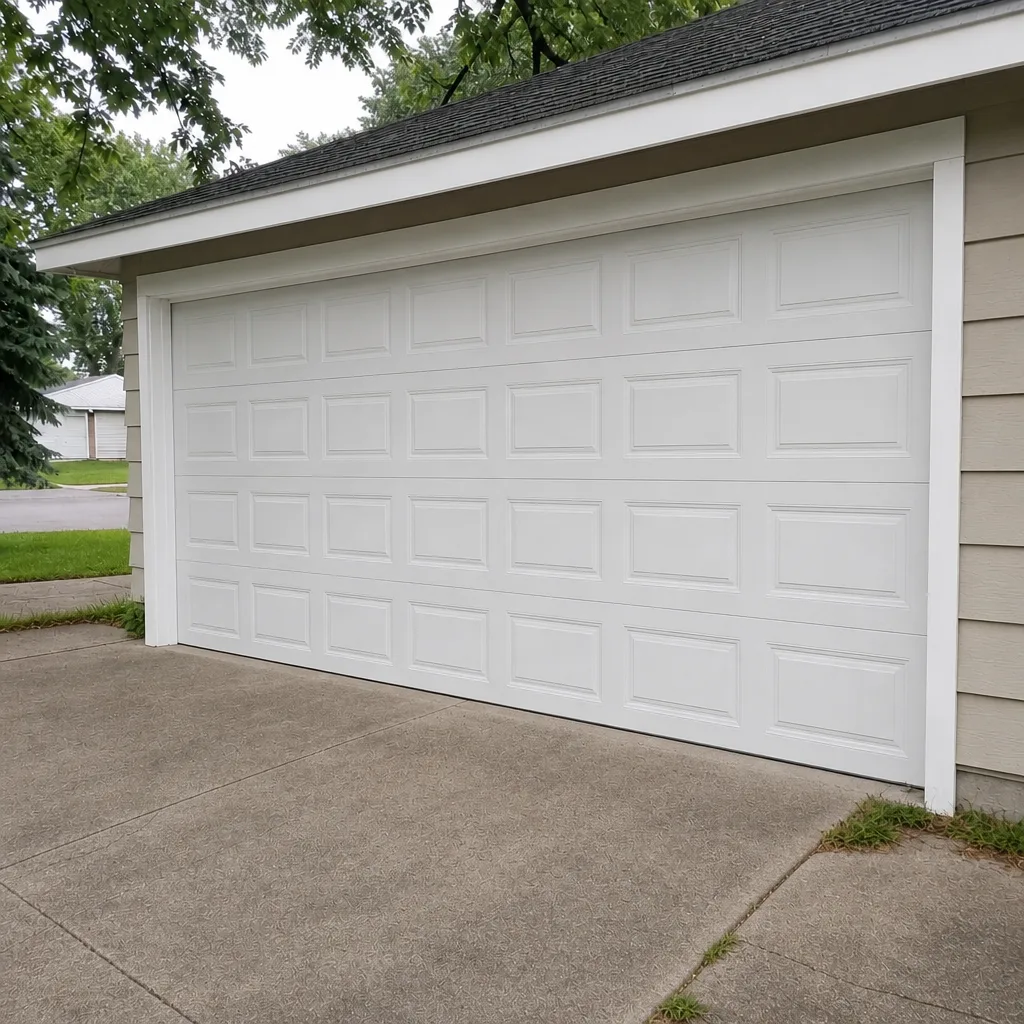 After
When to Call a Professional
Call a professional when a spring breaks, when a cable jumps its drum or goes slack, when the door comes off one track, when the opener runs but the door doesn’t move, or when the door reverses inconsistently and the safety sensors won’t stay aligned. Call when a door won’t close all the way, because an open garage in Battle Creek is a security problem tonight, not a project for next month. Call when the door is hard to lift by hand, which usually points to spring or balance trouble. And call before you buy a replacement, because a free measure turns an estimate into a real number. Garage Door Repair Battle Creek offers free estimates in Battle Creek – call (844) 964-0574. Our technicians have up to 9 years of experience, and we handle spring work in-house instead of referring it out.
Frequently Asked Questions
Expect roughly $1,900 to $5,500 for the door and installation, with a single-car door near the low end and an insulated double-car door near the top. Opener replacement adds about $450 to $1,200. Those are estimates for planning; the written quote after a free measure is the price that stands. Call (844) 964-0574 for an exact quote – estimates are free.
No, if the itemized quote was written after a measure. On a replacement, everything is inspected and measured before the price is set, so the written number is the number. On a repair, the technician diagnoses first, quotes, and gets approval before any work starts. If something unexpected turns up mid-job, you’re told and asked before it changes the price. The price is quoted and agreed before any work starts.
Yes, for an attached garage with living space above or beside it, which describes most Battle Creek homes. Insulation slows heat loss through the door, cuts drafts in rooms over the garage, and quiets both the door and the street. For a detached, unheated storage garage, a single-layer door is a reasonable money saver instead.
A standard chain or belt drive runs roughly $450 to $800 installed, and a 1-horsepower smart-connected unit runs about $700 to $1,200. Most attached garages here do well with a belt drive at ¾ horsepower. We service LiftMaster, Chamberlain, Genie, Craftsman, Raynor and other major brands, so an existing opener doesn’t need replacing just because it isn’t the one we’d sell. Call (844) 964-0574 for a quote.
About $180 to $340 per spring, and a matched pair usually gets replaced together, so a pair runs roughly double that. Springs are under extreme tension and can cause serious injury to anyone working on them without training and proper tools; high-tension springs need a trained technician. Call (844) 964-0574 – we handle spring repair in-house and estimates are free.
Yes. A door that won’t close leaves the garage open, and that’s a tonight problem, not a next-week problem. We offer true emergency garage door service for failures outside the usual day, and we’re closed on Saturday, so a door that fails then gets booked for Sunday. Call (844) 964-0574 and we’ll get you scheduled.
The Bottom Line
The number on a garage door quote is a sum of decisions, not a market rate. Gauge and insulation set the door price in Battle Creek, drive type and horsepower set the opener price, and labor scope covers the haul-away, header work and any electrical before the install even starts. Spring cost is per spring, not per pair. Repair vs. replace comes down to parts cost as a share of a new door, plus whether the panels themselves are still sound. Build your estimate in those four buckets, ask for a free measure, and get the price in writing before anyone starts.
Need a real number for your garage? Call Garage Door Repair Battle Creek at (844) 964-0574 for a free estimate. We work on your brand, diagnose before we recommend, and quote the price before the work begins.
Written by the team at Garage Door Repair Battle Creek.