Last updated November 21, 2026
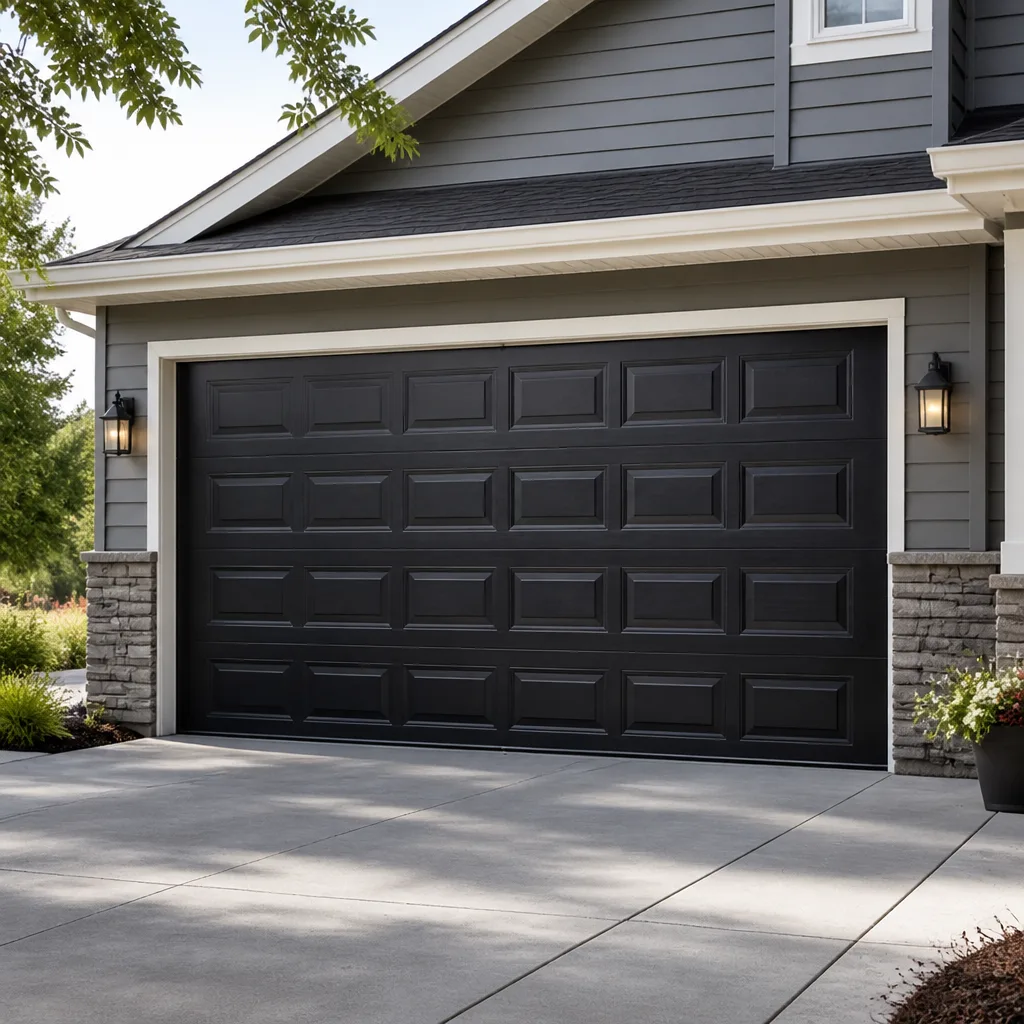 Raised-panel steel
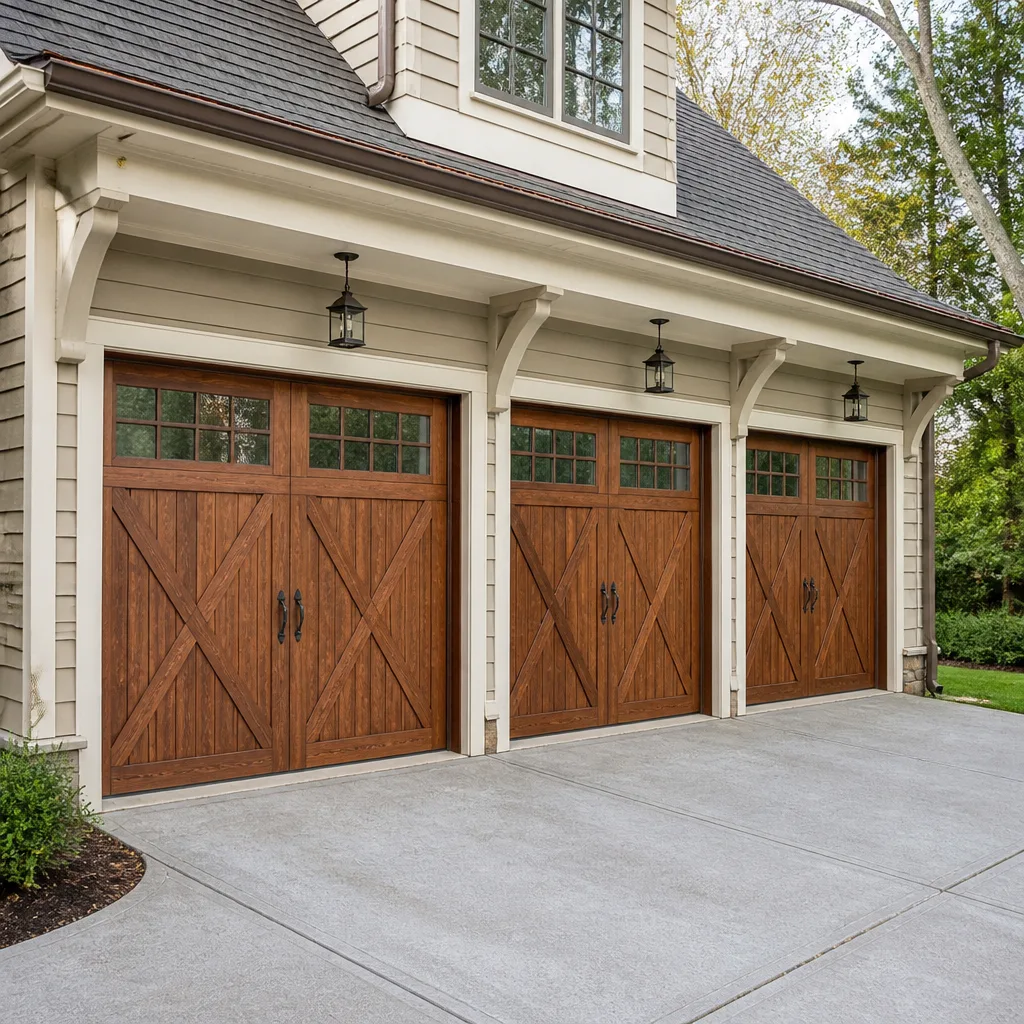 Carriage house
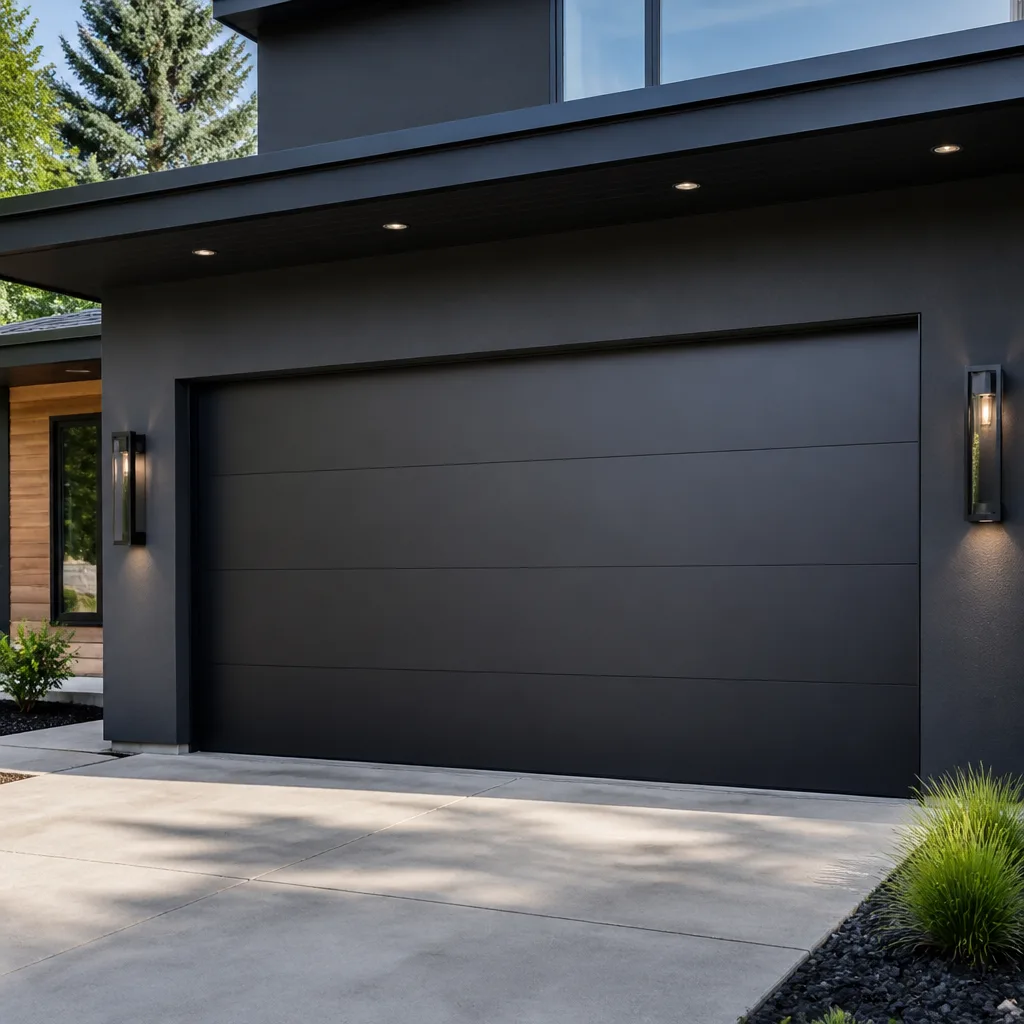 Modern flush
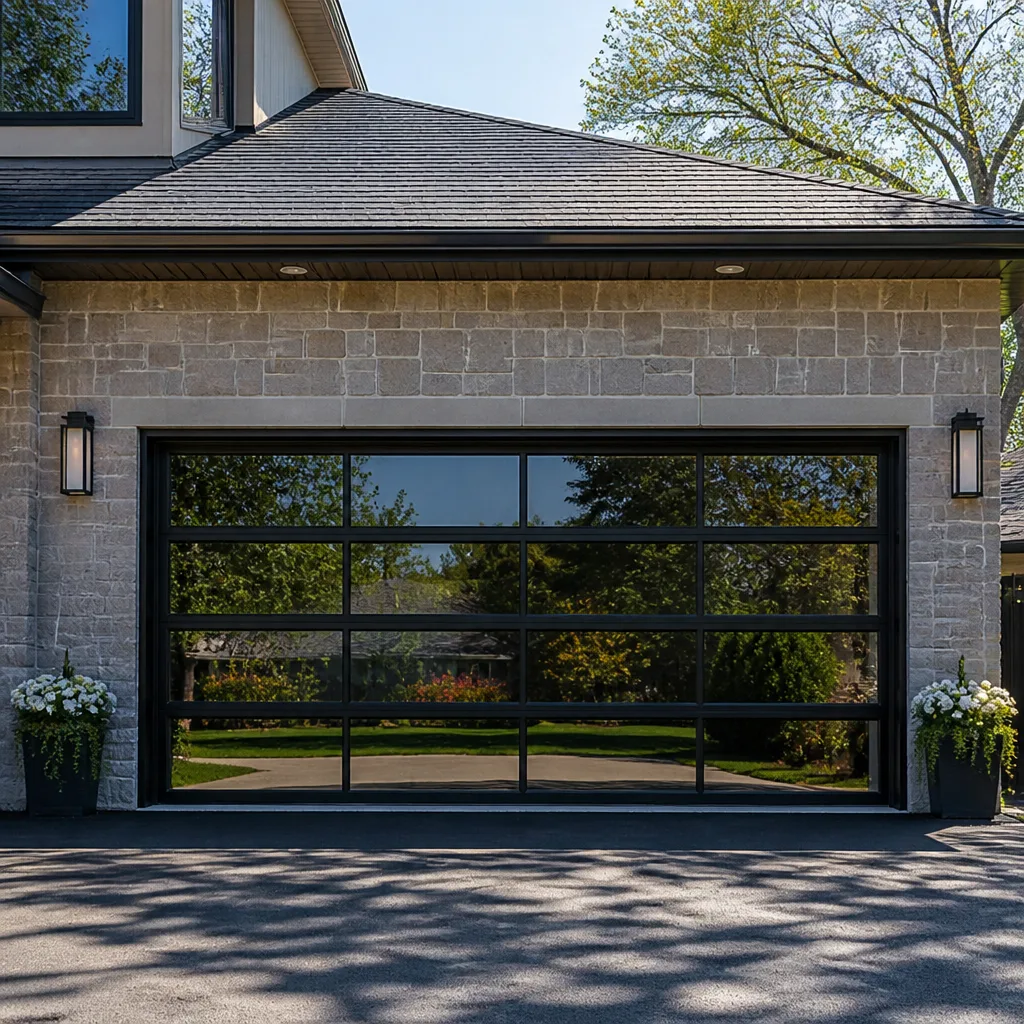 Full-view glass
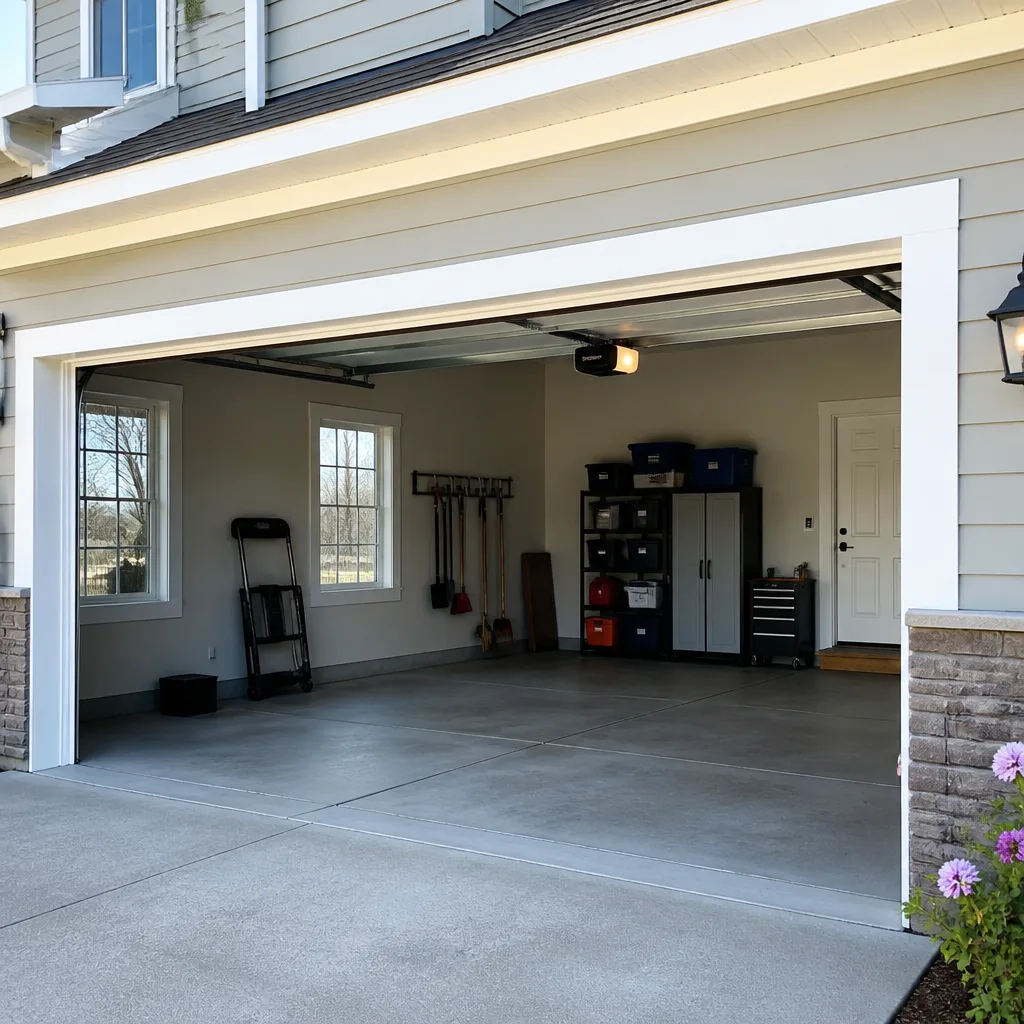 LiftMaster openers
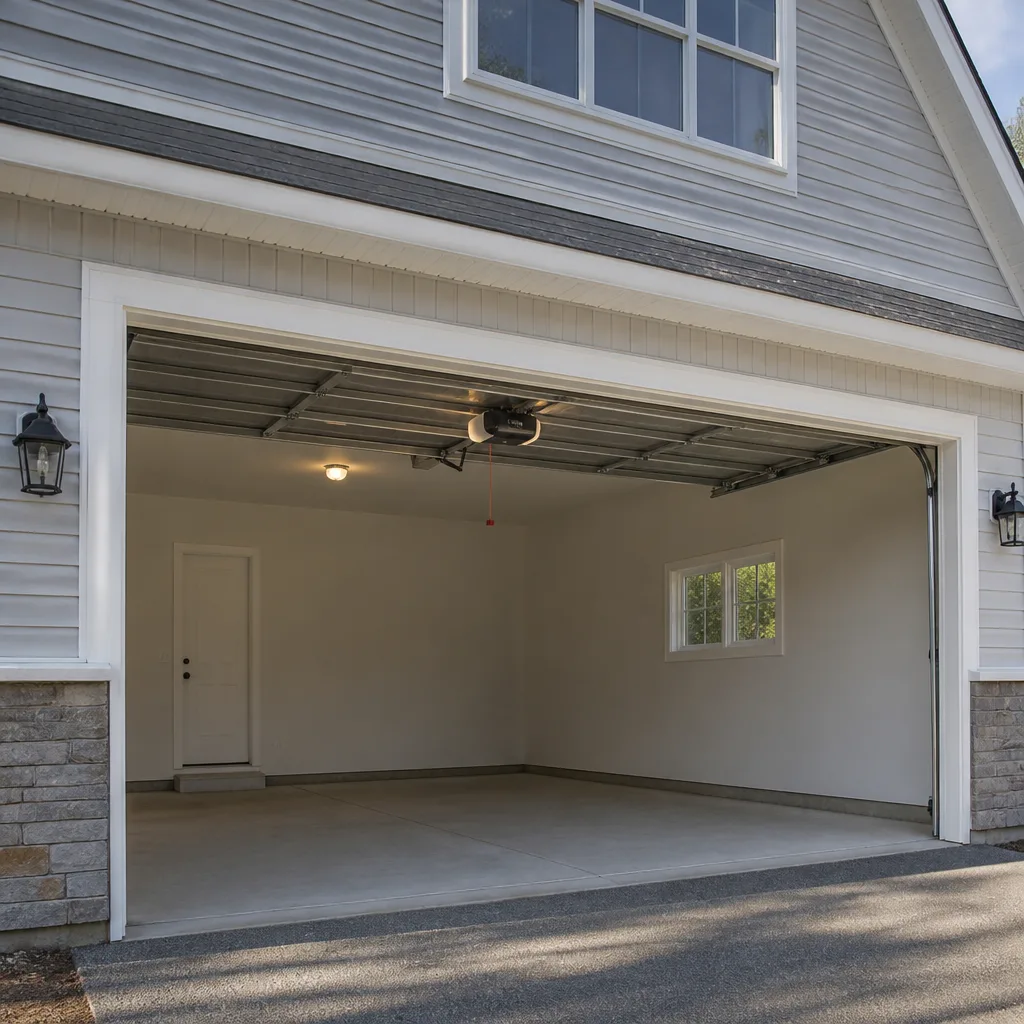 Chamberlain openers
Full 25-point door and opener safety check with every visit - springs, cables, rollers, tracks, and your LiftMaster or Chamberlain opener included
You get a price before we start. It does not change when the pro arrives.
Get your free estimateThe Complete Guide to Garage Doors in Battle Creek
Most garage door advice you’ll find online was written for a climate with one season. Minnesota has four, and two of them are actively trying to pull your door apart. Our freeze-thaw cycles flex the steel, harden the seals, and make springs work against temperatures that swing forty degrees in a week. A door that behaves perfectly in October can sound like a machine full of gravel by February.
This guide is built around what actually happens to garage doors in Battle Creek, MN. We’ll cover how the cold stresses your springs, seals, and opener motor, which materials earn their price here and which don’t, how brand availability works locally, and the real tipping point between repairing a door and replacing it. By the end you’ll know what your door is up against and when it’s time to call someone.
Quick Answer
Garage doors in Battle Creek, MN need three things to survive a Minnesota year: springs rated for serious temperature swings, weather seals that stay flexible below freezing, and an opener sized for the extra resistance cold adds to every cycle. A complete inspection should cover springs, cables, rollers, hinges, tracks, seals, balance, and opener force settings. When something feels wrong, the cause is usually found by diagnosis, not by guessing at the part that looks worn.
Styles & brands we work with
- Raised-panel steel
- Carriage house
- Modern flush
- Full-view glass
- LiftMaster openers
- Chamberlain openers
Table of Contents
- How Battle Creek’s Freeze-Thaw Cycles Stress Your Door
- Door Materials Worth the Premium in a Minnesota Climate
- Brand Availability and Service Coverage in Battle Creek
- Panel Replacement vs. Full Door Replacement
- What a Full-System Inspection Should Cover
- Opener Strain: Why Cold Weather Kills Motors Early
- Maintenance You Can Do Yourself in Battle Creek
- A Seasonal Checklist for Minnesota Garage Doors
How Battle Creek’s Freeze-Thaw Cycles Stress Your Door
A torsion spring is a precisely wound coil of steel under heavy tension. Its job is to make a door that weighs well over a hundred pounds feel like ten pounds of pull. What the spring manufacturer can’t control is the temperature it works in. Steel that flexes easily at room temperature becomes stiffer and more brittle as mercury drops, and the coil in your garage feels every swing between a mild afternoon and a hard overnight freeze.
Here’s what that means in practice across a Battle Creek winter:
- Spring fatigue accelerates. Cold cycling works the coil harder per turn, so a spring pushed through repeated thaw-freeze swings reaches its breaking point faster than one in a mild climate.
- Seals lose flexibility. The bottom weather seal that lies against the concrete becomes stiff and tears instead of compressing. A torn seal lets meltwater and cold air in, and that water refreezes against the door.
- Cables stretch and lose tension. Cable tension is what keeps the whole lifting system even. Loose cables mean one side of the door lifts before the other.
- Metal contracts and tracks shift. Steel tracks are anchored to a garage structure that itself moves with the frost. Small misalignments that would never show up in San Antonio show up here by mid-January.
- Opener motors work harder. Cold grease thickens, the door is stiffer, and the motor draws more current per cycle to lift the same weight.
None of this means your door is doomed. It means the maintenance schedule that makes sense in a mild climate is too relaxed for a garage in Battle Creek. Look at the door and listen to it at each change of season, and you’ll catch a worn seal or a stretched cable before it becomes a snapped spring on a Sunday morning.
Door Materials Worth the Premium in a Minnesota Climate
The single most useful question to ask about a new garage door in Battle Creek is not which color, it’s what it’s built from and how thick the steel is. In a mild climate, a thin door can survive on low use. In Minnesota, gauge and insulation are what separate a door that lasts through fifteen winters from one that dents, rusts from the inside, and stops sealing.
Here’s how the main material choices shake out for a Minnesota garage:
- Steel gauge: A 24- or 25-gauge steel face is common in builder-grade doors and it dents easily against a hard freeze and a bump from a car. A 27-inch or similar thicker face grade is noticeably more rigid and resists both impact dents and the panel wobble that cold cycling brings. It’s worth the upcharge here in a way it may not be in a warm climate.
- Insulation R-value: This is where people overspend or underspend. If your garage is attached to the house and you use it in winter, higher insulation (R-value in the double digits) pays back in comfort and keeps the garage warmer than the outside air, which actually helps the door hardware last longer. If your garage is detached and unheated, a modest insulation value is fine and the money is better spent on a thicker steel skin and a quality seal.
- Wood and composite: Wood looks good and insulates well, but the seasonal movement here opens joints and finish failures, and it needs repainting on a less than generous schedule. Composite sits somewhere in between and needs less upkeep than wood.
- Seals: Whatever material you choose, the bottom seal and side seals are what actually keep the freeze out. A door with high insulation and a stiff, torn seal is a cold door.
Our technicians have up to 9 years of experience installing and servicing all of these materials, and the honest recommendation is the same nearly every time: put your budget into steel gauge and a good perimeter seal first, insulation second.
Brand Availability and Service Coverage in Battle Creek
Not every national brand has the same local reach. A homeowner in Battle Creek may find that the door on their house is from a brand whose parts are readily available, or from one that makes a good product but leaves local service thin. Knowing the difference saves you being told “we only service what we sell” and being handed a replacement quote you didn’t need.
We’re trained on 8 of the industry’s most widely installed brands, and they come up in almost every garage in and around Battle Creek:
- LiftMaster and Chamberlain: The two you’ll meet most often on openers. Both are common on Minnesota homes and both have repair paths that don’t require a full replacement.
- Genie: Pairs well with hard-working residential openers and has its own diagnostic quirks our technicians know.
- Clopay and Amarr: Two of the most common names on residential doors, and both have configurations that hold up in cold-weather climates.
- Wayne Dalton, Craftsman, and Raynor: Also fully supported, which matters because a homeowner with a Craftsman opener shouldn’t have to call a dealer to get it looked at.
Multi-brand capability is the difference between a quick diagnosis and a frustrating runaround. We identify the real cause before recommending a fix, and we can work on the equipment you already own. If your door needs repair rather than replacement, a technician trained across these brands is the one to call. garage door repair starts with a proper diagnosis of what’s actually wrong.
Panel Replacement vs. Full Door Replacement
The most common decision in Battle Creek is not “repair or replace” in the abstract. It’s “can I replace the damaged panel, or does the whole door have to go?” The answer depends on the door, the damage, and how the rest of the door is holding up. Here’s how we think it through:
- Assess the damage type. A single dented or cracked panel from a car bump or a freeze crack is usually a panel job. Damage to the structural frame, bent tracks, or a warped door that no longer sits flat means the whole assembly is suspect.
- Check panel availability. Panel replacement only makes sense if the exact profile and color are still made. On older doors, that availability is the deciding factor. A door that’s been out of production for a long stretch may be a full replacement simply because the panel no longer exists.
- Age of the whole system. If the springs, cables, and opener are all near their end and the door face is worn, spending money on one panel is money spent on a door that’s about to need everything else. That’s the tipping point. On older Battle Creek homes, this calculation comes up more often than you’d think.
- Weather seal and cold performance. A new panel on a door with a failing perimeter seal doesn’t solve the freeze problem. If the reason you’re looking at the door is a cold draft, the seal is the real fix, not the face.
For a damaged door panel, a Garage Door Repair Battle Creek estimate covers both paths so you can compare a panel job against a full replacement on the same visit. When a full replacement is the right call, a garage door installation is measured, ordered, and scheduled to the door that’s actually on your house.
What a Full-System Inspection Should Cover
Most “tune-ups” are not inspections. A standard tune-up often means a squirt of lubricant on the rollers and a visual glance, and that misses the parts that actually fail first in a Minnesota winter. A proper full-system inspection in Battle Creek looks at every component that carries load or seals weather:
- Springs: Tension check, coil condition, and an honest read on how much life is left. Torsion and extension springs both count.
- Cables: Tension, fraying, and smoothness over the pulleys. A frayed cable is a fail-first part.
- Rollers and hinges: Wear at the wheel and at the hinge plate, because cold makes a worn roller squeal and then bind.
- Tracks: Alignment, bends, and anchor integrity. A track that shifted over the frost season will wear the rollers it carries.
- Seals: Bottom seal, side seals, and the top draft stop, checked for stiffness, tears, and gaps against the concrete.
- Balance: Whether the door lifts smoothly by hand to a half-open position and stays there, which tells us whether the spring and door are still matched.
- Opener force and safety reverse: Whether the force setting is correct for the resistance the cold adds, and whether the safety reverse stops the door on contact with an obstruction.
That last item is not just a convenience. An opener that’s been tuned to override resistance to force a cold door closed can fail to reverse when it should. The balance and force check is how you keep that from happening. Ask for the full list, not just an oiling.
Opener Strain: Why Cold Weather Kills Motors Early
Your opener doesn’t know whether the door is heavy or light. It knows how much current it’s drawing to move the door. In a Battle Creek winter, the door is stiffer, the grease in the opener gearbox is thick, and the motor pulls more current with every cycle. The opener is doing what it was asked to do, it’s just being asked to do more than it was sized for.
That excess strain shows up in a few recognizable ways:
- The door reverses or stalls partway up on the coldest mornings.
- The safety reverse stops working, or the opener beeps and stops without reason.
- The motor runs for a fraction longer than it used to before the door is fully up.
- The work light flickers or the opener chirps a warning about force.
When an opener is showing these signs, the diagnosis matters more than the part. We can repair your existing LiftMaster, Chamberlain, Genie, or Craftsman unit rather than telling you to replace it, so you’re not sold a new opening because a technician only services one brand. garage door opener repair covers the diagnostics, the force and reverse check, and the fix.
Maintenance You Can Do Yourself in Battle Creek
You can’t safely touch the springs or cables. A torsion spring under tension can injure or kill, and a cable that snaps back under load can do the same. Anything with stored energy is a call to a trained technician. What you can do yourself is keep everything else from adding strain to those parts. Small, regular effort is what keeps a Battle Creek door working through the cold.
- Lubricate moving metal, not springs. A few drops of a proper garage door lubricant on the rollers, hinges, and track bearings every season keeps the door moving smoothly and takes load off the spring.
- Wipe and inspect the seals. At each change of season, look at the bottom seal against the concrete and the side seals. Stiff or torn rubber means cold air and water are getting in. Replace the seal rather than fight it all winter.
- Listen to the door. A new squeal, grind, or uneven lift is your early warning. Note if it happens most on cold mornings, because that tells the technician something useful.
- Test the safety reverse. Once a month, lay a small obstruction in the door’s path and confirm the opener reverses. It takes two minutes and catches an opener issue before it becomes a stuck door.
- Clear snow and ice away from the threshold. A door forced against an ice ridge at the bottom is fighting a second load. Back off the bottom seal, don’t force it shut.
- Watch the tracks for frost heave. If a track has shifted over the frost season, the door will begin to bind. That’s a technician job in the cold, but spotting it early gives you time to schedule it.
A Seasonal Checklist for Minnesota Garage Doors
Think of the year in two checkpoints. Both fall right at a season change, which is exactly when a Battle Creek garage door is most stressed.
Before Winter
This is the critical pass. Check seals for stiffness and replace any that are worn. Test the safety reverse. Get a technician to check spring tension and balance before the cold sets in, so you’re not discovering a weak spring on the coldest morning of the year. Lubricate the rollers and hinges. Clear the threshold and make sure the bottom seal sits flat.
After Winter
The frost season leaves its marks. This is when you look for tracks that shifted, panels that cracked, and seals that tore against the ice. This is also when to check for early spring wear while the temperatures are still moderate and it’s easy to schedule a visit. Catching a worn spring here is far better than catching it mid-winter.
Two checkpoints a year is enough for most homes in Battle Creek. Homes with very old doors or heavy daily use may want a closer look, but the habit is the same: look and listen at the change of season, and act on what you see.
Common Mistakes to Avoid
- Letting a cold draft go unaddressed. A garage that’s cold in winter is letting the freeze in, and that freeze is reaching your springs and cables. Seal the draft before it costs you a spring.
- Calling the springs a DIY job. High-tension torsion and extension springs are among the most dangerous residential parts to handle. A ladder and a video is how people get hurt, not how they fix a door.
- Accepting “we only service what we sell.” A dealer with one brand will point a multi-brand customer toward a replacement. Ask first whether they can repair your existing brand.
- Buying the wrong door for a Minnesota winter. Thin steel and no insulation look fine in a showroom and struggle through a Battle Creek February. Ask about gauge and heating needs before you buy.
- Ignoring the safety reverse. It’s the part that protects the people and animals in the path of the door. It belongs on every inspection.
- Choosing price over diagnosis. A technician who identifies the cause before recommending a fix is a better call than the one who quotes the biggest job first.
- Forgetting the seal when the door face is fine. A good steel door with a torn bottom seal is a cold door. Address the seal even if the face looks fine.
See the difference
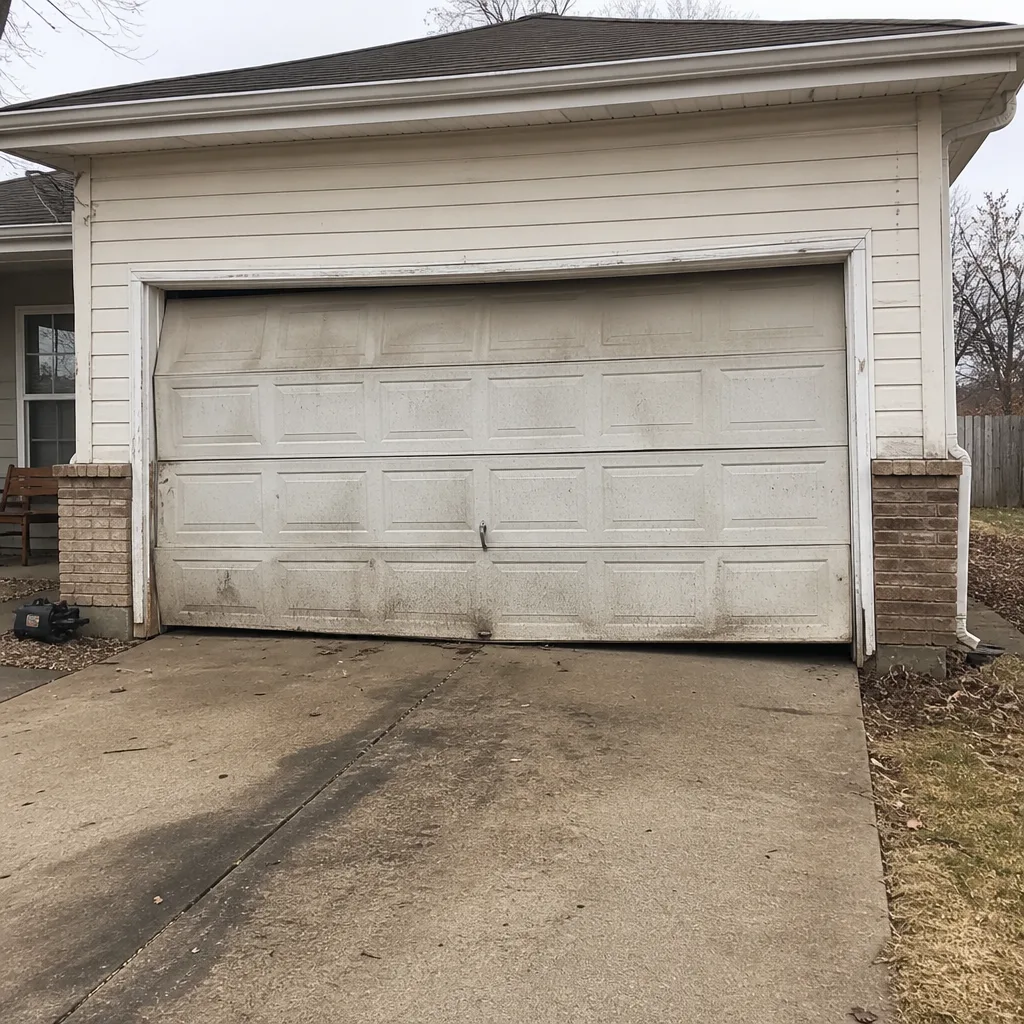 Before
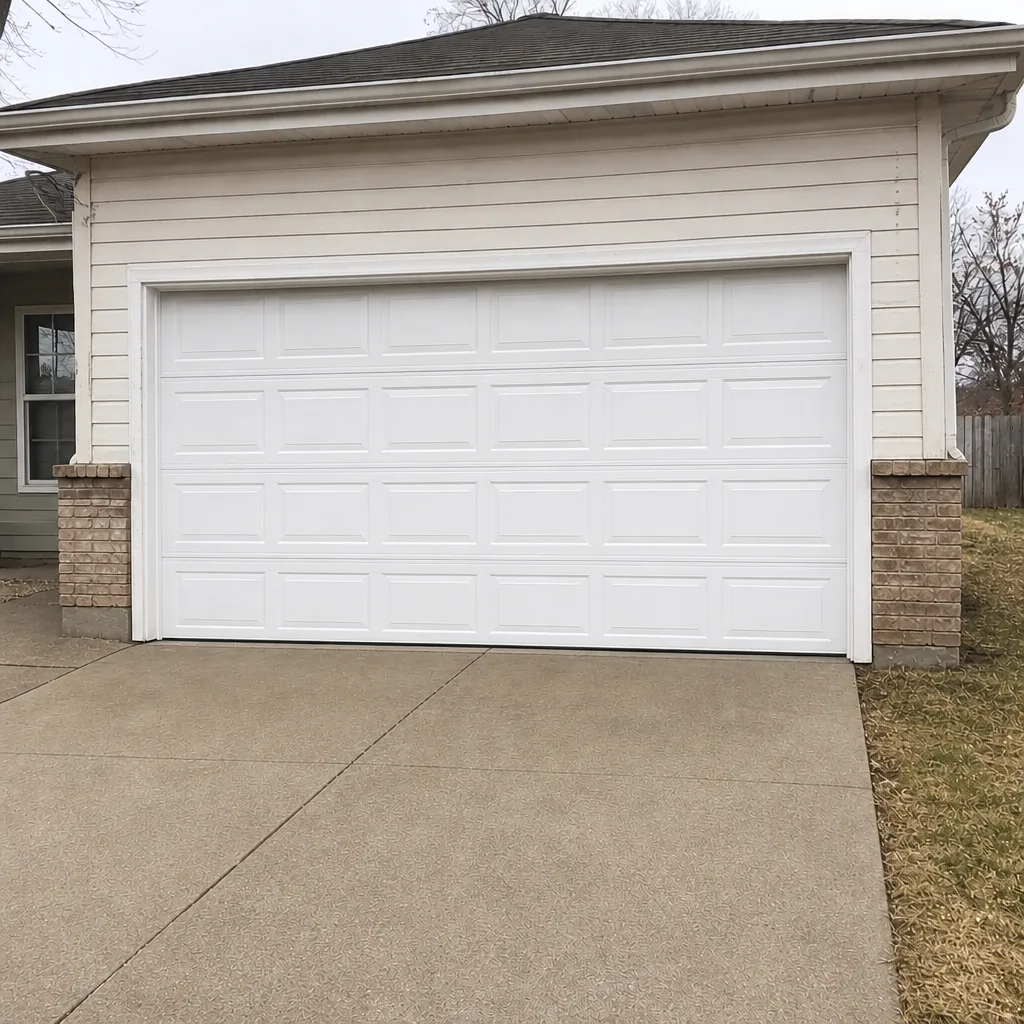 After
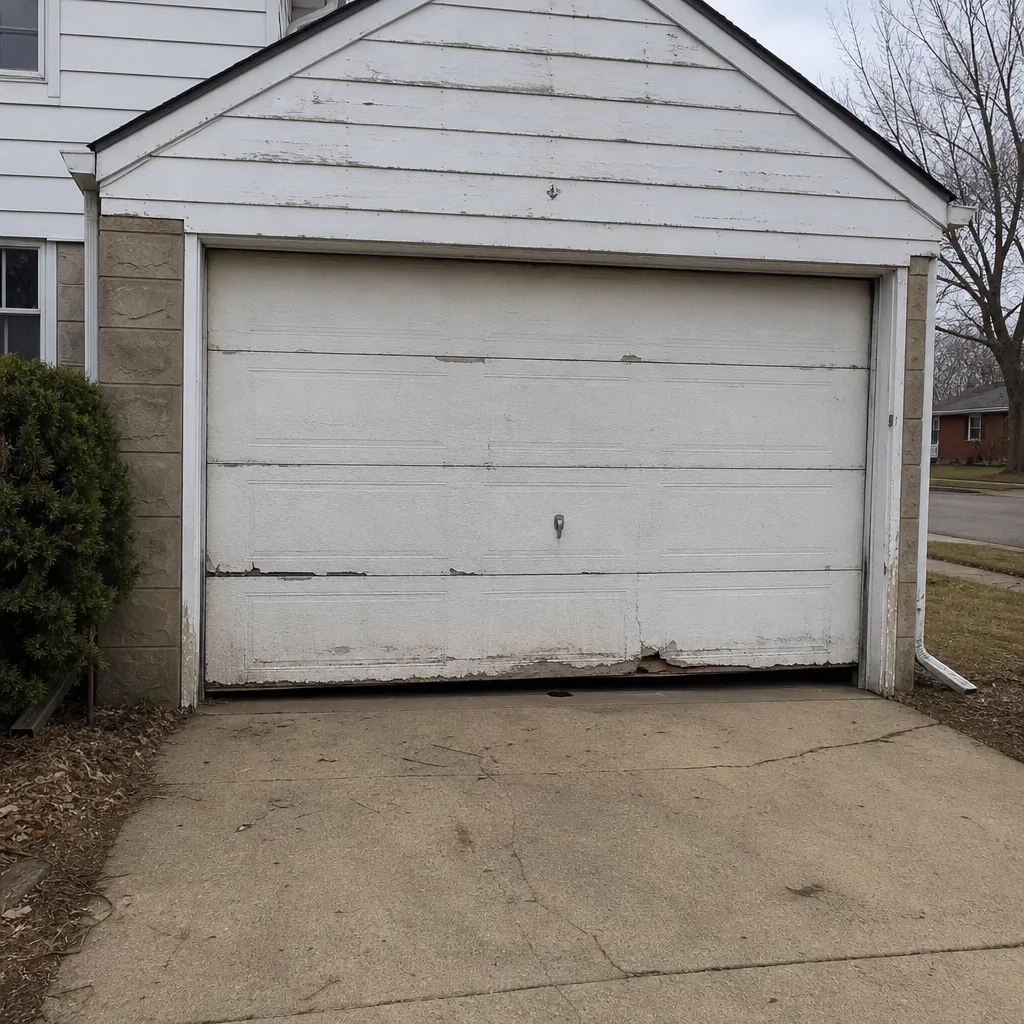 Before
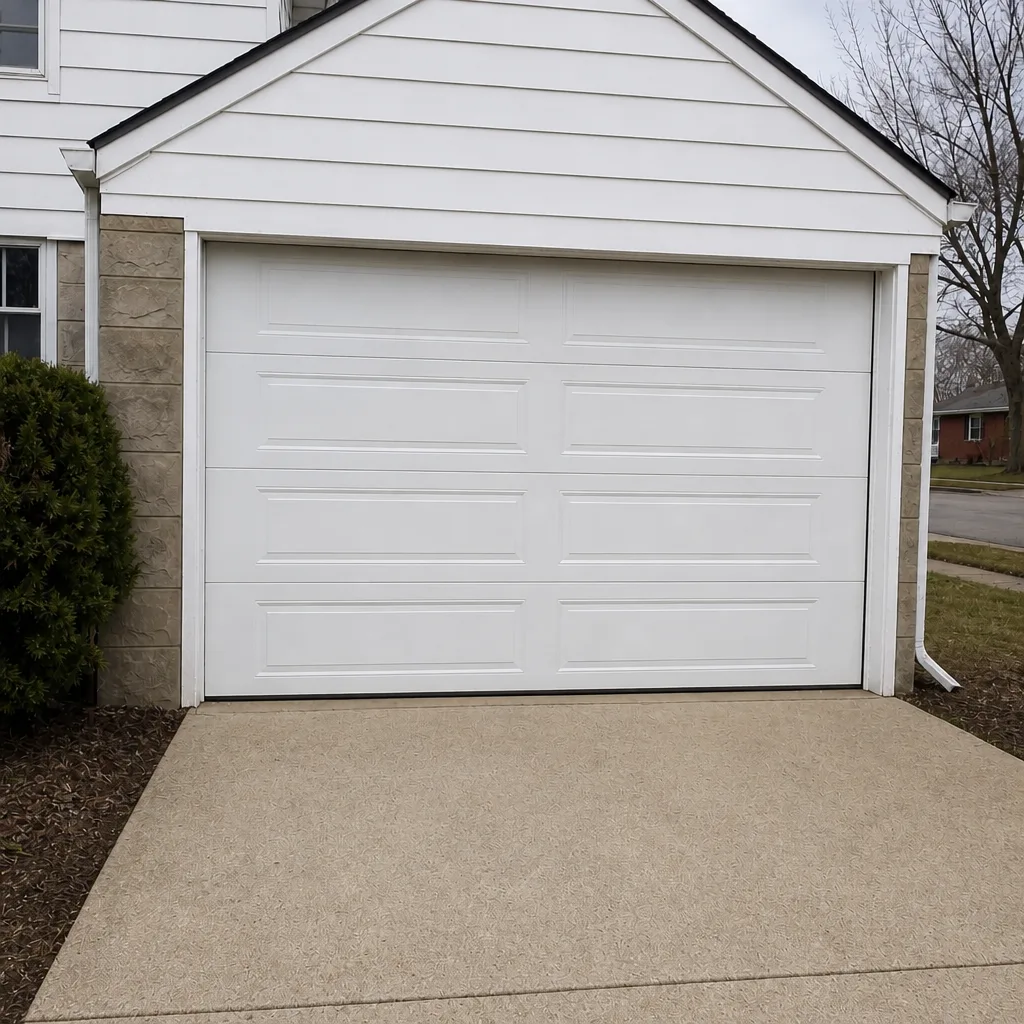 After
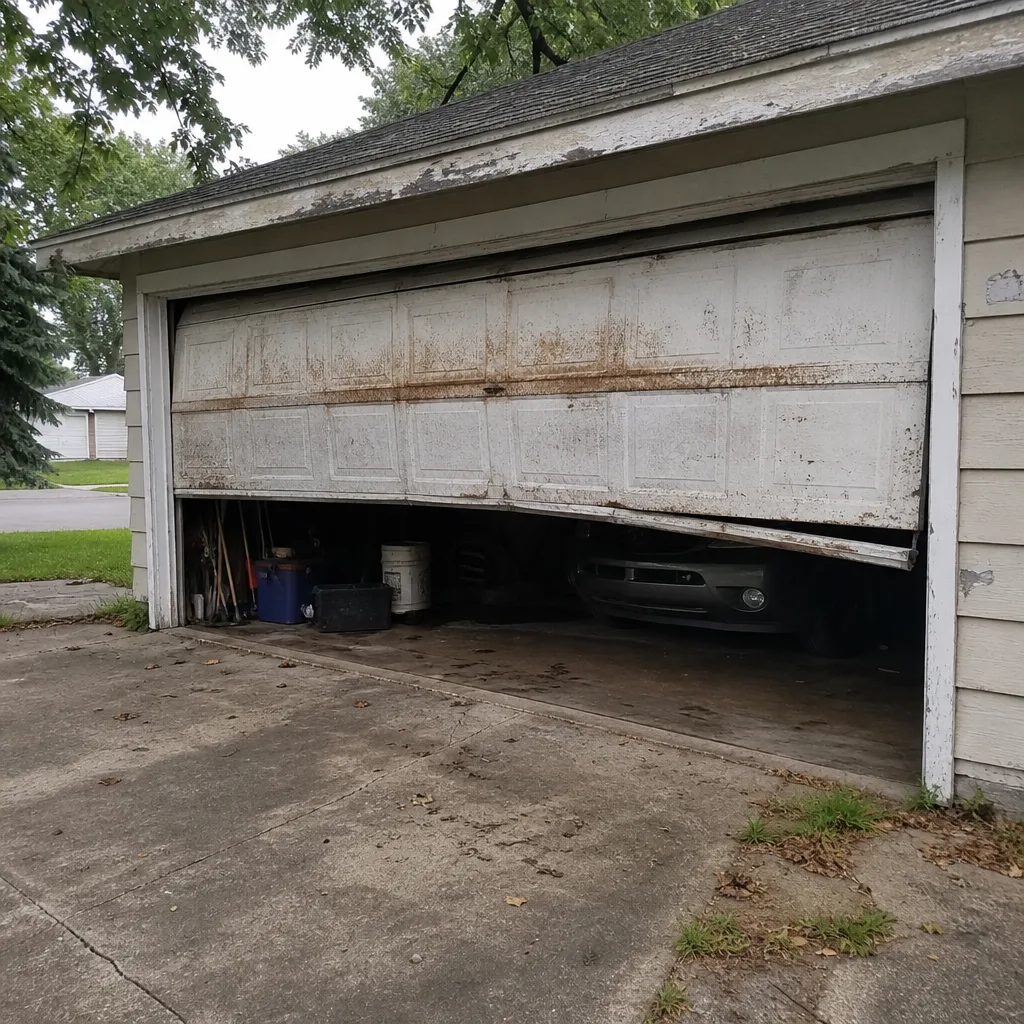 Before
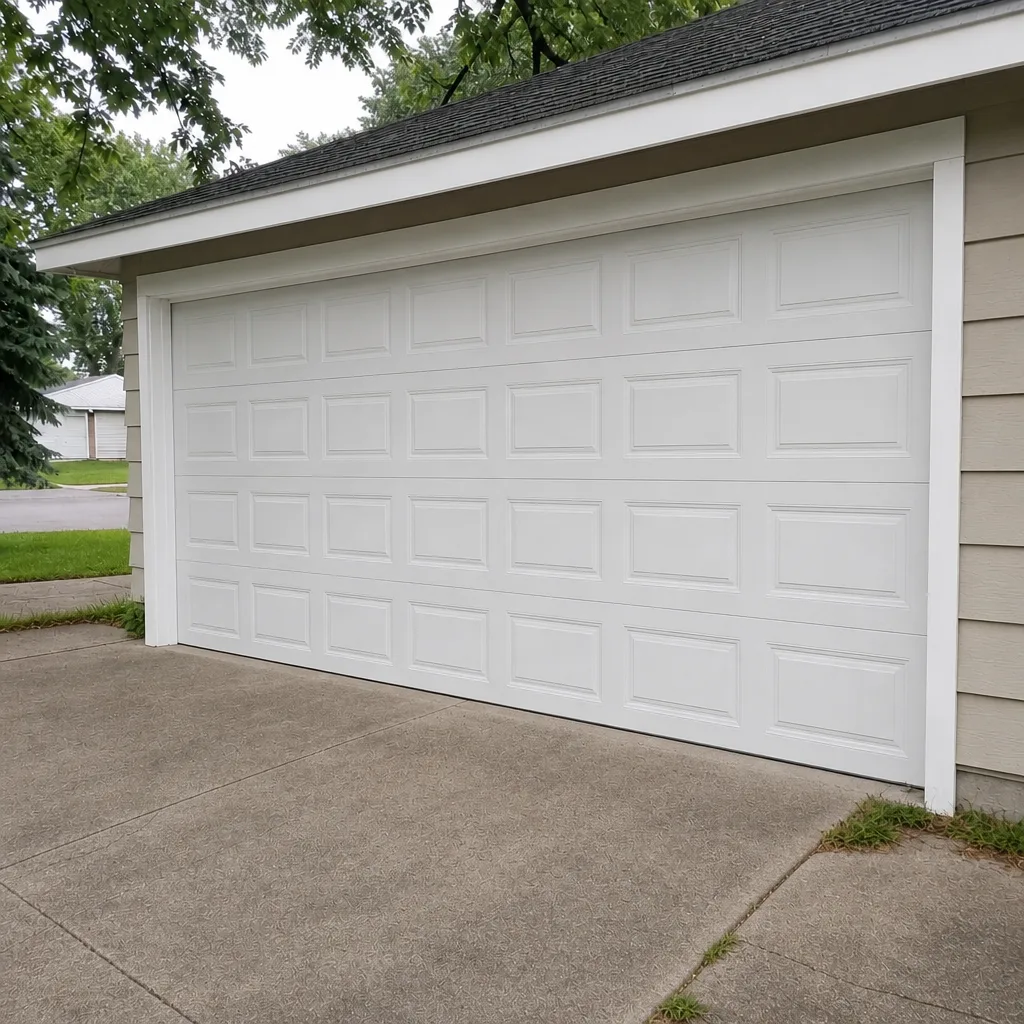 After
When to Call a Professional
Some things are a weekend project and some are a call. A door that won’t close is a security risk tonight, not a problem for next week. The same goes for a door that’s reversed or stalled partway up, a spring that snapped or a door that suddenly became too heavy to lift, or a loud noise that wasn’t there last month. Our technicians have up to 9 years of experience and are trained on the major brands, and our emergency service covers failures that can’t wait for the next appointment, including early mornings or Sundays. Garage Door Repair Battle Creek offers free estimates in Battle Creek, and the written quote is agreed before any work starts, so there’s no surprise bill. Call (844) 964-0574.
Frequently Asked Questions
Cold weather makes the steel in your springs stiffer and less forgiving, so the same lifting action works the coil harder. Repeated thaw-freeze swings speed up fatigue, and a spring that’s already worn is more likely to break in winter than in summer. That’s why pre-winter balance and tension checks matter here more than in a mild climate. Call (844) 964-0574 for an exact quote on spring repair, estimates are free.
Usually, a single damaged panel can be replaced on its own if the exact profile and color are still in production, while a door with structural frame damage, bent tracks, or a fully worn-out spring and opener system is a full-replacement case. On older homes, availability is often the deciding factor, because a panel out of production can’t be matched. The written estimate will show both options so you can compare.
We’re trained on 8 of the industry’s most widely installed brands, and that covers the vast majority of residential installations in and around Battle Creek. Those include Chamberlain, Genie, Clopay, Amarr, LiftMaster, Wayne Dalton, Craftsman, and Raynor, so you’re not turned away because of the hardware already on your house.
A full inspection checks springs, cables, rollers, hinges, tracks, seals, door balance, and the opener’s force and safety reverse settings, while a typical tune-up mostly lubricates the moving parts. The parts that fail first in a Minnesota winter, like cable tension and seal stiffness, are usually the ones a standard tune-up skips. Ask for the full list when you book.
Often yes. If the opener is a LiftMaster, Chamberlain, Genie, or Craftsman unit, we can diagnose the actual cause before recommending a fix, so a faulty sensor or a force setting isn’t mistaken for a dead motor. A replacement is a new unit cost; a repair is usually a smaller job. Call for an exact quote, estimates are free.
The price we quote is quoted and agreed before any work starts, so the written estimate sets the final price. That means the free estimate visit is where we work out the real job, from spring to opener, and the number you approve is the number you pay. Call (844) 964-0574 to schedule yours.
The Bottom Line
A garage door in Battle Creek lives a harder life than the same door elsewhere. Freeze-thaw cycles fatigue the springs, harden the seals, and add strain to every opener cycle, so the decisions that matter here are the ones made for a Minnesota climate rather than a generic one. Put your budget into steel gauge and a good seal first, keep the moving metal lubricated, inspect twice a year at the change of season, and don’t treat a spring or a cable as a DIY job. When something feels wrong, get a diagnosis before you buy a fix. Whether you need repair, opener work, or a new door, one call covers it: our technicians have up to 9 years of experience and can work on the brands you already own.
Call (844) 964-0574 for a free estimate on your Battle Creek garage door. Our technicians are trained across the major brands, we’ll quote and agree the price before any work starts, and a written estimate is yours with no obligation.
Written by the team at Garage Door Repair Battle Creek.